
Last updated November 24, 2026
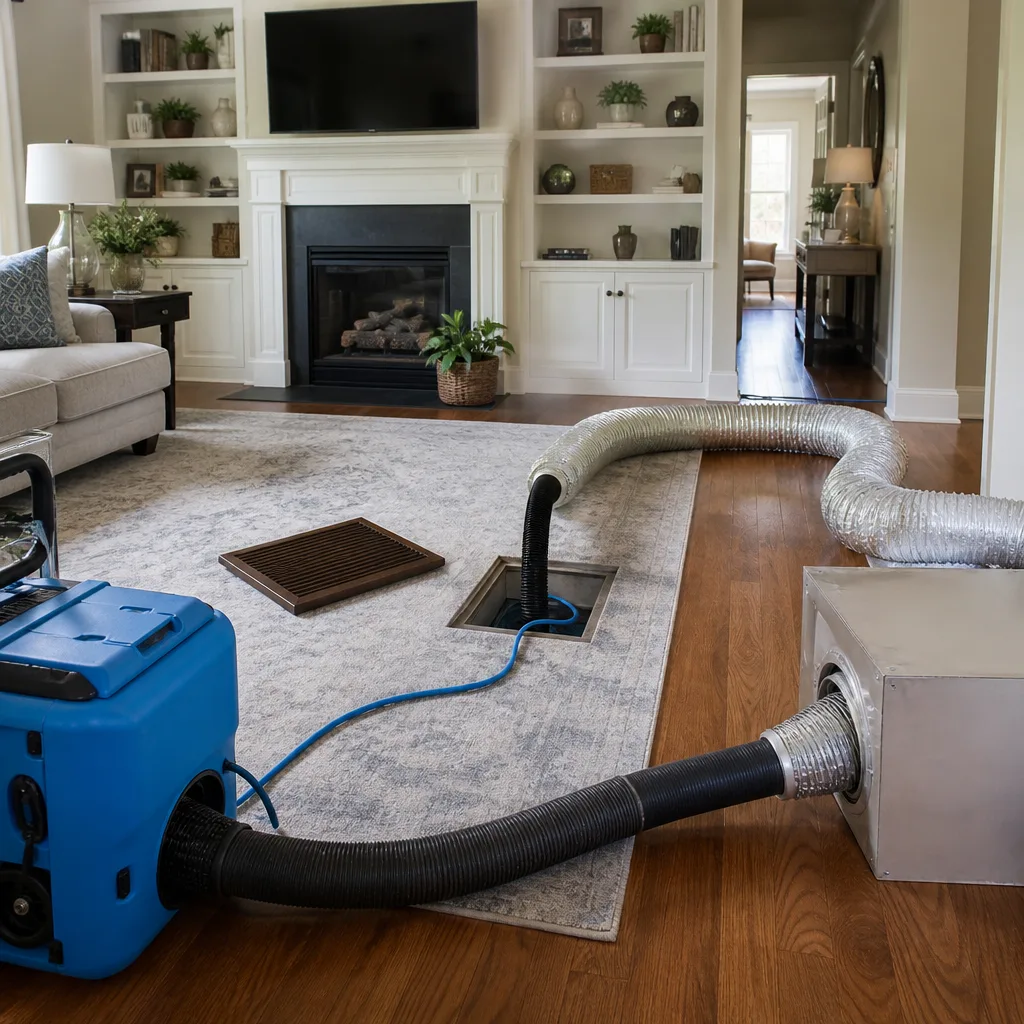 Whole-home duct cleaning
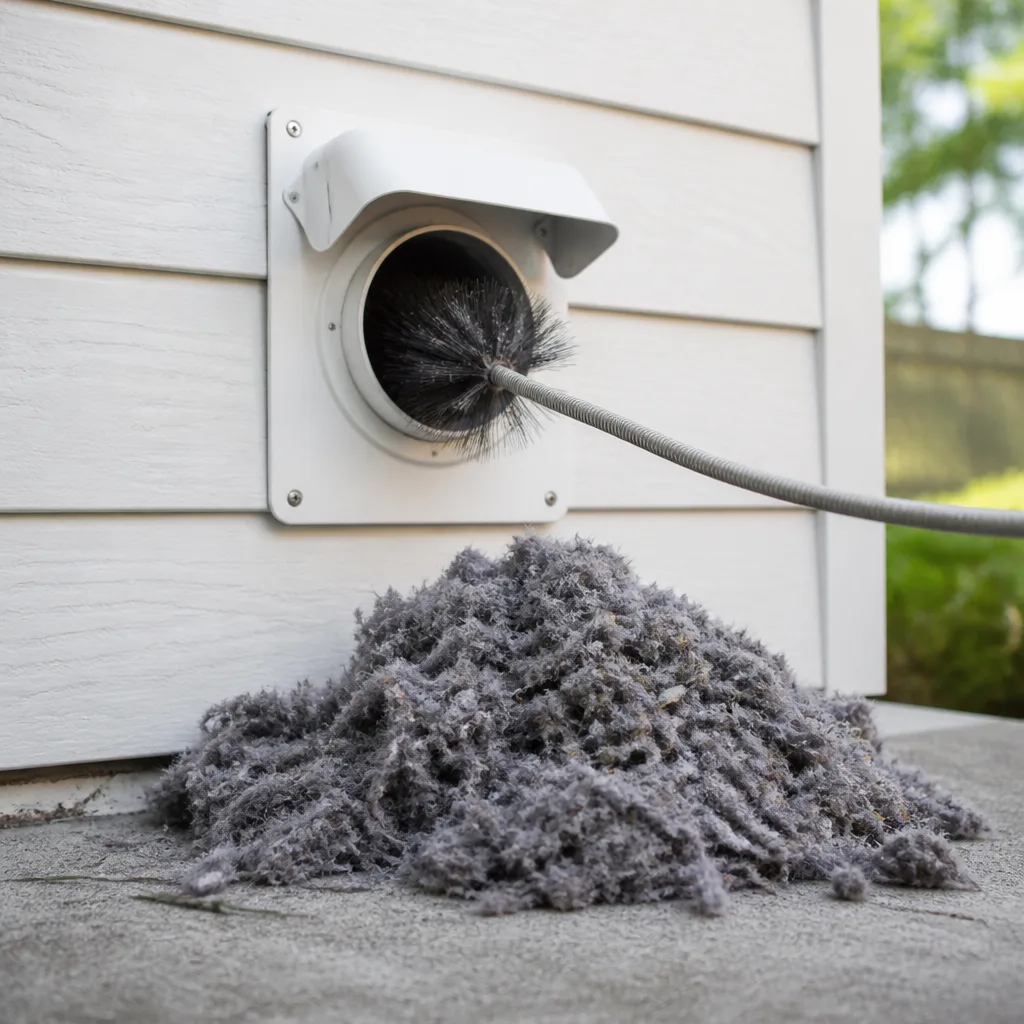 Dryer vent cleaning
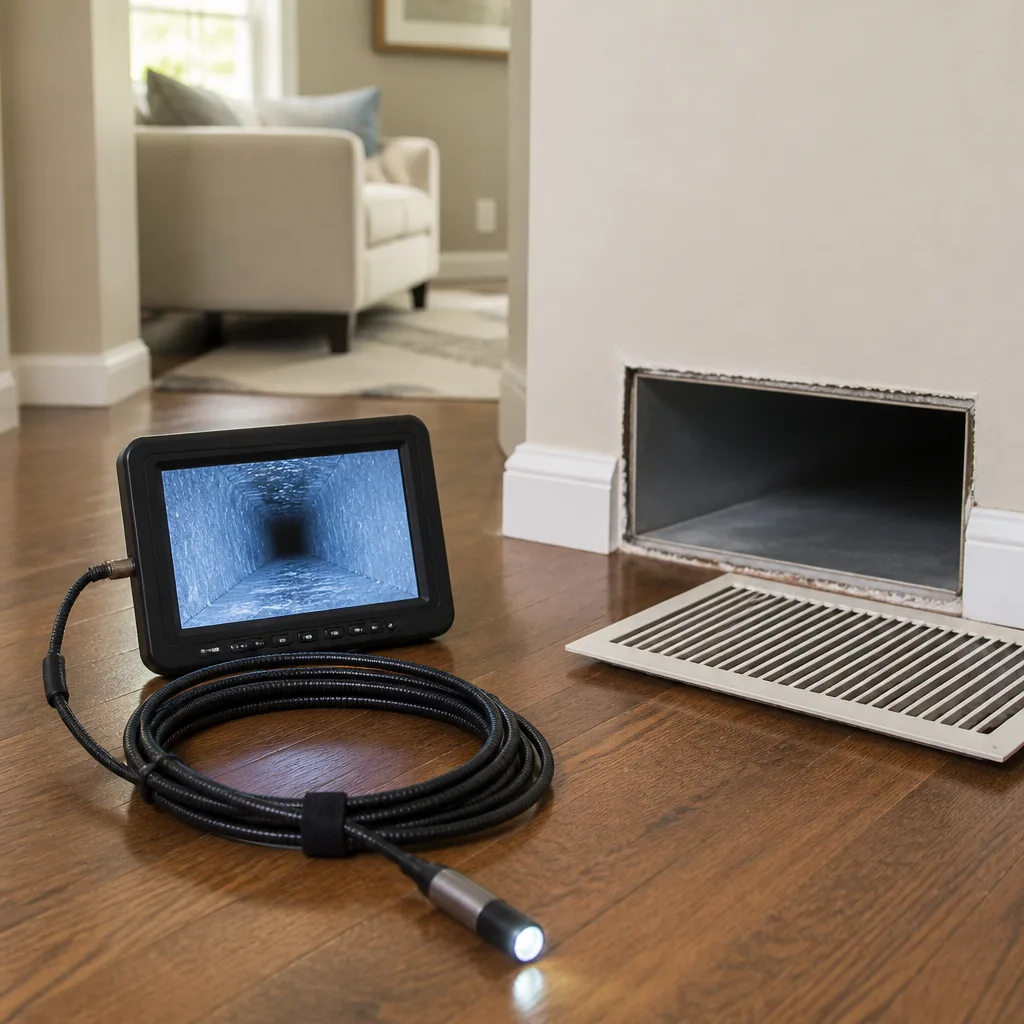 Camera inspection
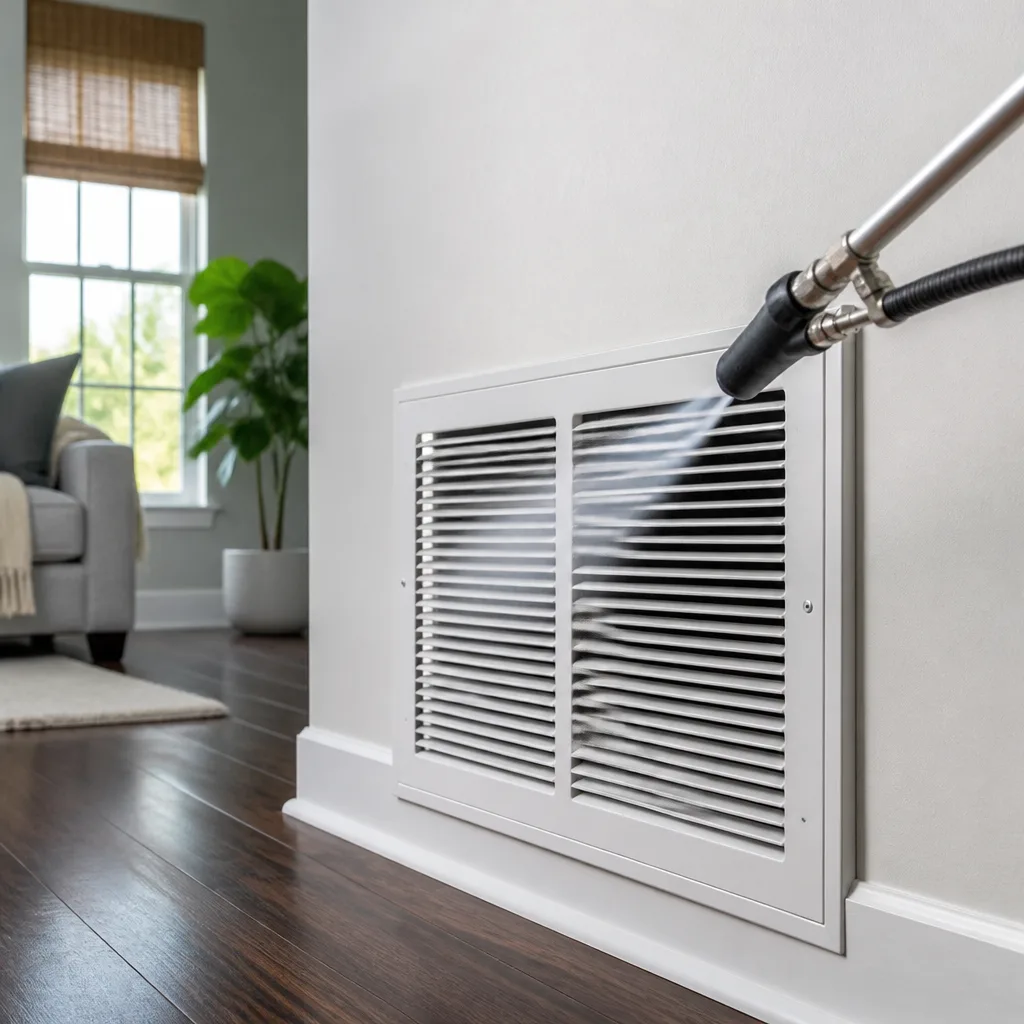 Sanitizing & deodorizing
Whole-system duct and dryer vent check with before-and-after photos - you see exactly what came out of your vents
That "$99 whole-house special" is a bait ad - the real number appears once they are in your hallway, or the "clean" is a shop-vac at the register. We photograph the inside of your ducts before and after instead.
The Complete Guide to Air Duct Cleaning in Lake Jeanette
Most air duct cleaning guides describe a generic national service. That advice gets copied from one website to the next, and it rarely fits what actually accumulates inside ductwork in a specific place. Lake Jeanette sits inside Guilford County’s humidity belt, where summer dew points routinely climb past 65°F. That single fact changes what grows in a duct system, how fast it grows, and what a real cleaning job has to include to remove it. Add the region’s clay-heavy soil, an older housing stock mixing 1970s ranch homes with newer construction, and you get contamination profiles that no single protocol handles well. This guide maps the full scope of a professional cleaning job in Lake Jeanette, so you know exactly what you’re buying before anyone shows up at the door.
Quick Answer
Air duct cleaning in Lake Jeanette means source-removal cleaning of the entire system, not just the supply registers: supply lines, return plenums, the air handler coil, and the drain pan, all cleaned with contact agitation and HEPA-rated extraction. In this climate, the job usually matters most where humidity has fed microbial growth in return runs and where clay-heavy outdoor soil has been drawn in through the return side. A complete job ends with visible before-and-after documentation of your own ducts, not a generic invoice.
Styles & brands we work with
- Whole-home duct cleaning
- Dryer vent cleaning
- Camera inspection
- Sanitizing & deodorizing
Table of Contents
- Why Lake Jeanette’s Climate Changes What’s Inside Your Ducts
- Source-Removal Cleaning vs. Blow-and-Go: How to Tell the Difference
- What the Equipment Actually Does: CFM, HEPA, and Contact Cleaning
- What a Complete Job Scope Includes
- How Home Age and Duct Type Change the Job
- A Professional Duct Cleaning Job, Step by Step
- How to Verify the Work Was Actually Done
- What Air Duct Cleaning Typically Costs
Why Lake Jeanette’s Climate Changes What’s Inside Your Ducts
Duct contamination isn’t the same everywhere. The mix of what ends up inside a system depends on outdoor humidity, local soil, and how the house itself was built. Lake Jeanette delivers a specific combination of all three.
Start with moisture. Piedmont summers push dew points above 65°F for weeks at a stretch. Every time a system cycles, return ductwork pulls in humid outdoor air that meets the cooler surfaces of the air handler and supply runs. Condensation forms, and where condensation persists, biological growth follows. The dark, damp interior of a return plenum is one of the most favorable environments a microorganism can find. This is why a cleaning that only addresses the supply side so often leaves the actual problem untouched.
Then there’s the soil. Guilford County’s clay substrate holds water far longer than sandy or loam soils do. Around Lake Jeanette, that means outdoor moisture lingers near foundations and crawl spaces after rain. When a return system draws from a crawl space or an attached garage, it can pull fine clay dust and elevated moisture indoors. Clay particulate is unusually good at clinging to duct walls, and it doesn’t simply blow through. Contact agitation is what dislodges it.
Finally, the housing mix. Lake Jeanette neighborhoods span decades of construction, and each generation of housing was built to different duct standards:
- 1970s and 1980s ranch homes often use rigid sheet-metal trunk lines with short flex branches. Sheet metal holds up well under brush cleaning; flex branches are more delicate and can trap debris in the corrugations.
- 1990s and 2000s construction leaned heavily on flex duct throughout, which is faster to install and quieter, but its ribbed interior catches dust and biological growth more aggressively than smooth metal.
- Newer construction with properly sealed and insulated systems stays cleaner longer, but only if the builder actually sealed the joints. Many don’t, and unsealed joints in a Lake Jeanette attic pull in insulation fibers and hot, humid attic air.
All three conditions point to the same conclusion: a cleaning protocol written for a dry, sandy climate won’t do the job here. The method has to agitate the duct wall, contain what comes off, and address moisture-fed growth, not just the visible dust at the register.
Source-Removal Cleaning vs. Blow-and-Go: How to Tell the Difference
Two companies can both advertise “air duct cleaning in Lake Jeanette” and perform wildly different jobs. The distinction that matters is source removal. Source-removal cleaning, following the NADCA standard, physically removes contaminants from the system and contains them for disposal. Blow-and-go cleaning uses compressed air to knock debris loose, then lets the HVAC system pull it back through the house, or vacuums only what’s reachable from the register.
Blow-and-go isn’t a scam in every instance, but it’s the wrong method for anything beyond light surface dust. In a humid Lake Jeanette home, it can actually make conditions worse by stirring up settled biological material and redistributing it through living spaces.
Here’s the practical part: you can usually tell which method was used without watching the entire job, if you know what to look for. Use this checklist:
- Ask about a vacuum before the work starts. A true source-removal job connects a HEPA-rated vacuum to the system to maintain negative pressure during cleaning. No vacuum connection, no containment.
- Look for access cuts. Source removal requires access ports cut into the plenum and sometimes the trunk line. They’re sealed afterward, but you can ask where they were placed.
- Check the return side. Blow-and-go jobs almost always skip the return plenum because it’s harder to reach. Ask specifically whether it was cleaned.
- Look at the air handler. A complete job exposes the evaporator coil and the drain pan. If those weren’t touched, the cleaning is incomplete.
- Ask for photos. Before-and-after photos of your own ducts, taken during the job, are the single most reliable verification. A legitimate company takes them without being asked.
- Watch for “fogging.” Some companies spray a deodorizing fog through the vents and call it cleaning. It masks odors and cleans nothing.
If a company can’t answer these questions directly, that answers your question. Contact cleaning with real containment equipment is the standard we hold our work to, and you’re entitled to hold anyone you hire to the same one.
What the Equipment Actually Does: CFM, HEPA, and Contact Cleaning
Equipment is where quotes diverge most sharply. Two jobs can be described identically and use equipment that differs by an order of magnitude in capability. Here’s what the specifications actually mean.
Airflow, measured in CFM. CFM stands for cubic feet per minute. Truck-mounted vacuum systems that pull 3,000+ CFM create far more suction at the duct wall than portable units, which typically deliver a fraction of that. Higher CFM means the vacuum can capture debris as it’s dislodged, rather than allowing it to settle back into the system. It also means a single pass covers a duct run thoroughly, instead of needing repeated passes.
HEPA-rated filtration. HEPA filters capture 99.97% of particles at 0.3 microns, which includes most of the fine particulate that matters for respiratory health. A Nikro HEPA-rated vacuum is the benchmark for this. If a company runs a shop vacuum into your ductwork, fine particles pass through the filter and back into the air you’re breathing. This matters especially in homes with asthma or allergy sensitivities, and it’s why we treat HEPA containment as a baseline rather than an upgrade.
Contact cleaning. A Rotobrush system uses rotating brushes that physically agitate the duct wall while high-flow extraction pulls the dislodged material into a HEPA-filtered vacuum at the same time. The brush is the key. A blow-and-go job, or even a vacuum-only pass, doesn’t loosen what’s bonded to the duct surface. Brushing does. This is the same principle remediation contractors rely on: the material has to be mechanically detached and then captured, in a single continuous operation.
One note on equipment before we move on. In our experience, the difference between a $199 coupon special and a legitimate full-system cleaning usually comes down to whether the company brought the equipment, not whether they charged more for the same job. When you call Air Duct Cleaning Lake Jeanette, you’re asking about a job priced for the equipment and scope it requires. That’s the number you want.
What a Complete Job Scope Includes
A complete duct cleaning job has a defined scope. Anything less should be priced accordingly, and you should know the difference before you compare estimates. The full scope breaks down like this:
- Supply lines. Every supply run from the trunk to the register boot. This is the portion most companies cover; it’s the minimum, not the whole job.
- Return plenums and return ductwork. The return side draws in more concentrated contamination than the supply side, especially in humid climates. Skipping it is the most common shortcut.
- The air handler coil. The evaporator coil sits wet during cooling season. That’s the ideal surface for biological growth in a Lake Jeanette summer. It needs to be cleaned as part of the system, not left alone.
- The drain pan. Condensate collects in the pan. If the pan is fouled, it re-seeds the coil and the surrounding ductwork immediately. A cleaning without drain pan attention is incomplete.
- Register covers and boots. Removed, cleaned, and reinstalled. This is a small detail that reveals how thorough the rest of the job was.
Beyond the cleaning itself, the full-service scope includes related work that many homeowners discover they need once they’re standing in front of a technician:
- Duct repair and sealing for joints, tears in flex duct, and disconnected runs that are leaking conditioned air into attics or crawl spaces.
- Sanitizing after cleaning, particularly where biological growth has been identified. We use Guardsman-grade products, and treating the finishing step with the same care as the cleaning matters.
- Air quality upgrades through Aprilaire and Honeywell filtration or humidity control. A post-cleaning upgrade solves the same problem the cleaning addressed: preventing it from coming back.
- Dryer vent clearing, the single most overlooked fire-safety item in most homes, and one we handle alongside air duct cleaning in the same visit.
If you take only one thing from this guide, take this: ask every company you call which of the items on the first list they include, and get it in writing. The scope you’re quoted is the scope you’ll get.
How Home Age and Duct Type Change the Job
Two homes in the same Lake Jeanette neighborhood can require different cleaning methods and take different amounts of time. Construction type is the reason.
Flex duct. A corrugated flexible duct is quick to install and easy to route. Those corrugations are also where fine debris, clay dust, and biological growth lodge. Brush cleaning has to be done carefully inside flex duct because aggressive brushing can tear the inner lining. A trained technician adjusts brush pressure for flex runs, and the job takes longer to complete thoroughly than the same footage of rigid metal would. Much of the newer single-family construction around Lake Jeanette uses flex throughout the branch runs.
Rigid sheet metal. Sheet metal is smooth and cleans more quickly, but it holds a static charge and bonds dust to the surface. It’s also prone to seams that leak. Many 1970s and 1980s ranch homes here have metal trunk lines with flex branches, which means both methods show up in the same house.
Ductboard. Some homes use fiberglass ductboard for the trunk. Ductboard is a specialized material, and it needs the right brush type and pressure to avoid damaging the interior surface. It’s more common in certain vintages of construction than others, and a technician who asks what kind of duct material you have before arriving is one who knows why.
Sealed versus unsealed systems. Newer homes with well-sealed and insulated ductwork in conditioned space stay cleaner and need less frequent service. Older homes with attic or crawl space duct runs, common in Lake Jeanette neighborhoods built across the 1970s through 1990s, pull in insulation fibers and outdoor particulate at every unsealed joint. That’s why two adjacent houses with identical floor plans can need very different amounts of work.
The practical takeaway: no one can give you a genuinely accurate estimate for a Lake Jeanette home without knowing the duct material, the age of the home, and whether the duct runs sit in conditioned or unconditioned space. Any estimate that arrives before those answers is a guess.
A Professional Duct Cleaning Job, Step by Step
Here’s what a complete source-removal cleaning looks like in practice. This is the standard we bring to every Lake Jeanette job, and it’s the sequence you should expect from anyone you hire.
- Inspection and documentation. Before any cleaning starts, the system is inspected and the initial condition is photographed. This is your baseline, and it’s what makes before-and-after comparison meaningful.
- System isolation and negative pressure. A HEPA-rated vacuum connects to the duct system and holds negative pressure during the entire cleaning. The point is that dislodged material goes into the vacuum, not into your living room.
- Register removal. Supply and return register covers come off, and each is cleaned separately before reinstallation.
- Access creation. Where the system needs it, access ports are cut into the plenum and trunk lines. They’re sealed to match the original duct material afterward.
- Contact cleaning of supply runs. Rotobrush brushes agitate each supply run from the trunk to the register boot, with extraction running continuously. Brush pressure is matched to the duct material, heavier inside metal and lighter inside flex and ductboard.
- Return plenum and return ductwork cleaning. The return side is cleaned with the same method. Skipping this step leaves the most contaminated part of the system untouched.
- Air handler coil and drain pan. The evaporator coil is cleaned and the drain pan cleared. In a humid Lake Jeanette climate, these are the two surfaces most likely to be re-seeding the system if left alone.
- Sealing and repair. Any joints, tears, or disconnected runs found during cleaning are repaired and sealed, so the system actually holds the cleaning rather than leaking it back out.
- Sanitizing (where needed). Where biological growth has been identified, a Guardsman-grade sanitizing treatment finishes the cleaning.
- Final photographs. After completion, the system is photographed for comparison. This is the record of what changed.
- Air quality review. If the household has ongoing allergy or humidity concerns, filtration and humidity control options are discussed. Aprilaire and Honeywell systems are the two brands we work with, because they solve the conditions that created the problem in the first place.
The order matters. Contaminants have to be loosened, captured, contained, and sealed away. Every step depends on the one before it, and skipping any step shortchanges the rest.
How to Verify the Work Was Actually Done
Here’s the most common objection we hear from homeowners in Lake Jeanette: how do I know the work was actually done? It’s a fair question. This industry has earned some of its skepticism. The answer is that verification is possible if you know where to look.
- Before-and-after photos of your own ducts. This is the single strongest verification. A legitimate cleaning produces a documented before-and-after of the actual system. You should see it without having to ask for it, and it should be your ducts, not stock imagery.
- The vacuum was connected to the system. Ask before the work starts whether the HEPA vacuum will be connected to the ductwork. A company that doesn’t do this isn’t doing source removal.
- Access ports are sealed. If access cuts were made, ask where, and verify they’re sealed afterward.
- The air handler coil is touched. If the technician can’t tell you whether the coil and drain pan were cleaned, they weren’t part of the job.
- Written scope before the work starts. The scope that’s written down is the scope that gets done. Get the price and the scope in the same document.
One flat price per system, agreed before work starts, is the model we work from. It removes the incentive to shortcut because there’s no rush to the next job. It also means no per-vent pricing, which is the structure behind most of the low-coupon bait-and-switch complaints you’ll read about. And before-and-after photos of your own ducts come with every job. If you want to see them, you’ve got every right to.
What Air Duct Cleaning Typically Costs
Pricing is where most homeowners get surprised, so let’s be direct. A full-system cleaning is priced by the scope described above and by the size of the system, not by the number of vents. A typical whole-system cleaning in Lake Jeanette falls into a range that depends on system size, duct material, and whether sanitizing is included. Smaller homes with a simple metal trunk-and-flex layout sit at the lower end of the range. Larger homes with flex runs, multiple air handlers, or biological growth that requires sanitizing land at the upper end.
What drives the number up or down:
- System size, not vent count. A 1,800-square-foot home with a tight layout can take less time than a 1,200-square-foot home with long runs and multiple returns.
- Duct material – flex and ductboard take more time than rigid metal.
- Access – systems with concealed or awkwardly routed ductwork take longer to access and clean.
- Sanitizing where biological growth is present.
- Duct repair or sealing discovered along the way, quoted as a separate scope item.
- Dryer vent cleaning if added in the same visit.
Two quotes that are far apart on the same system usually means one of them left something out. Ask both companies what’s included, whether the return plenum is in scope, whether the coil and drain pan are included, and whether they’ll provide before-and-after photos. Those answers will tell you which quote you’re really comparing. A written estimate sets the final number, and the estimate is free. Call (877) 792-7174 and we’ll walk you through what your system needs.
Common Mistakes to Avoid
- Hiring on price alone. A coupon price almost always represents a supply-register-only pass. The return plenum and air handler, where the actual problem lives, are not in scope at that price. You can’t compare a full job to a partial one, and the cheapest quote rarely reflects comparable work.
- Letting anyone clean without a connected HEPA vacuum. If the vacuum isn’t connected to the system during cleaning, you’re paying for blow-and-go. Dust goes into the air, not into containment, and nothing is actually removed from the system.
- Skipping the return plenum. The return side pulls in more concentrated contamination than the supply side, especially in this climate. A cleaning that covers only supply runs leaves the worst of it in place.
- Treating the air handler as out of scope. In a humid Lake Jeanette summer, the evaporator coil and drain pan are the surfaces most likely to be re-seeding the system. A cleaning without them is a partial cleaning of a complete system.
- Accepting fogging as cleaning. A deodorizing fog masks odors. It doesn’t remove biological growth or bonded debris. If a company’s primary tool is a spray bottle, ask what’s actually being cleaned.
- Assuming the system will stay clean once cleaned. In a climate with weeks of summer dew points north of 65°F, a cleaning without addressing humidity control or filtration solves the problem for one season. Cleaning plus Aprilaire or Honeywell filtration addresses it going forward.
- Not asking what kind of duct material is in the house. Brush pressure and cleaning method depend on it. If the technician hasn’t asked by the time they arrive, the cleaning isn’t calibrated to the system.
See the difference
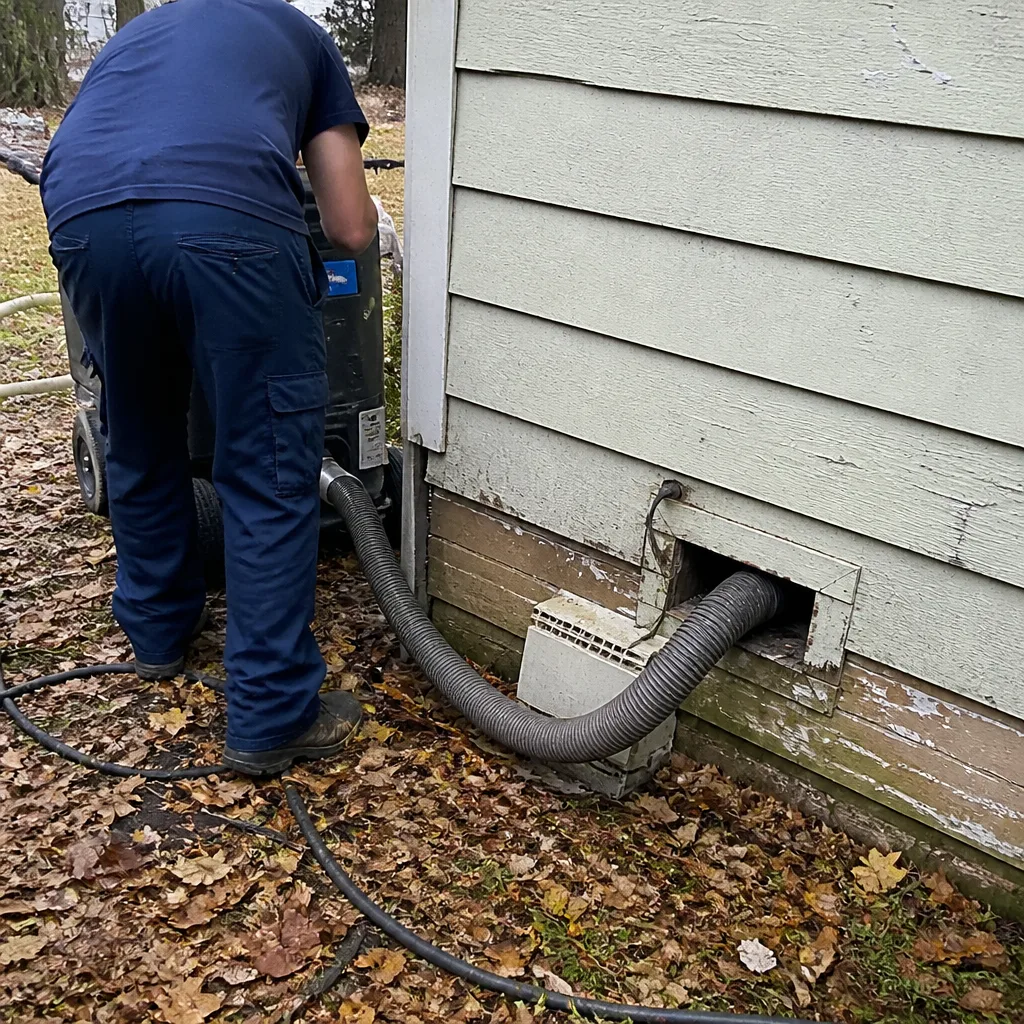 Before
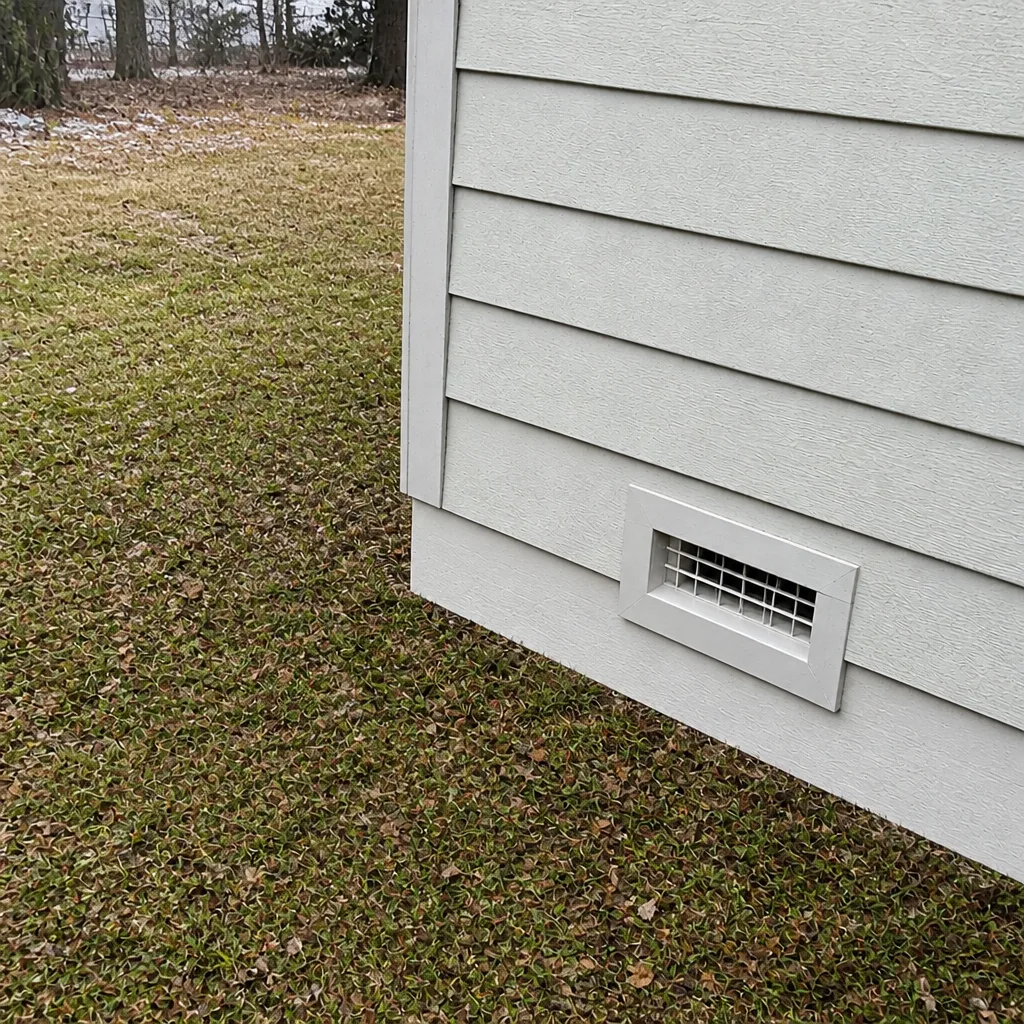 After
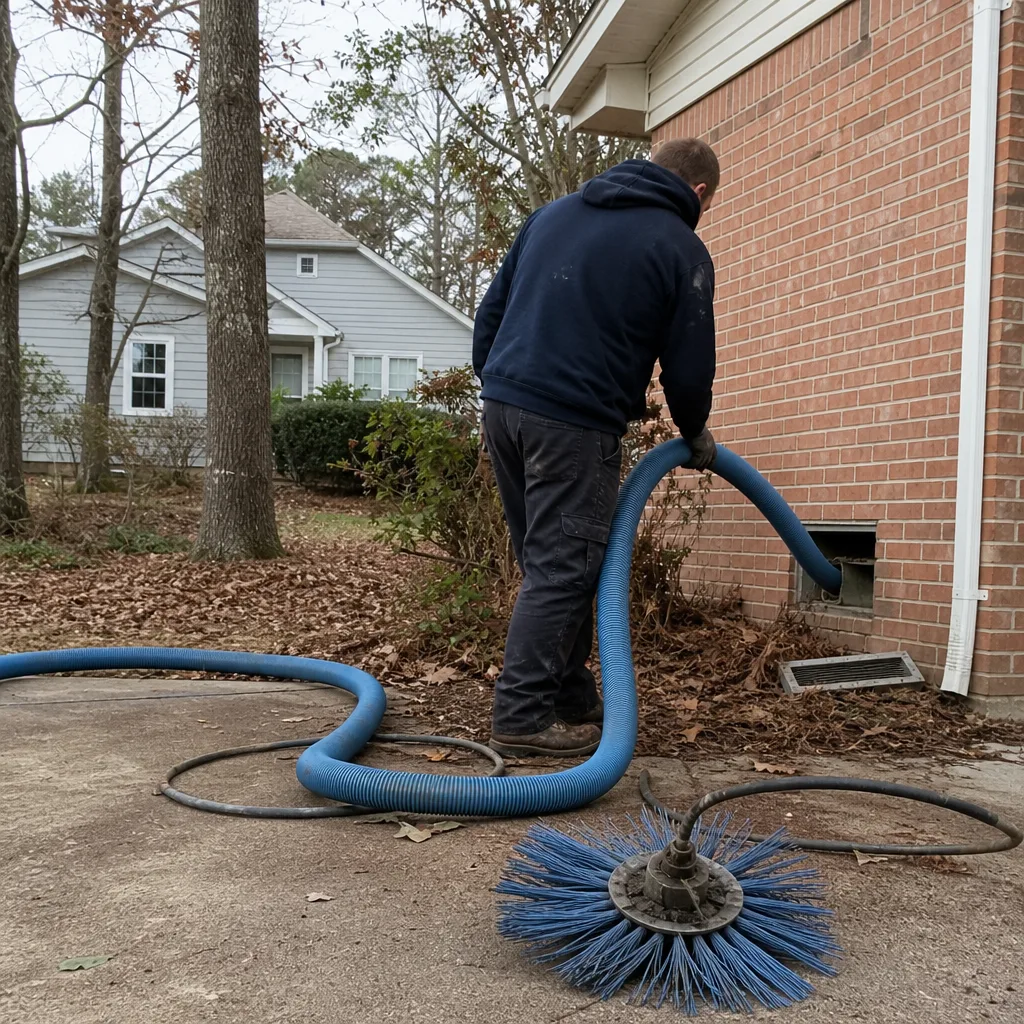 Before
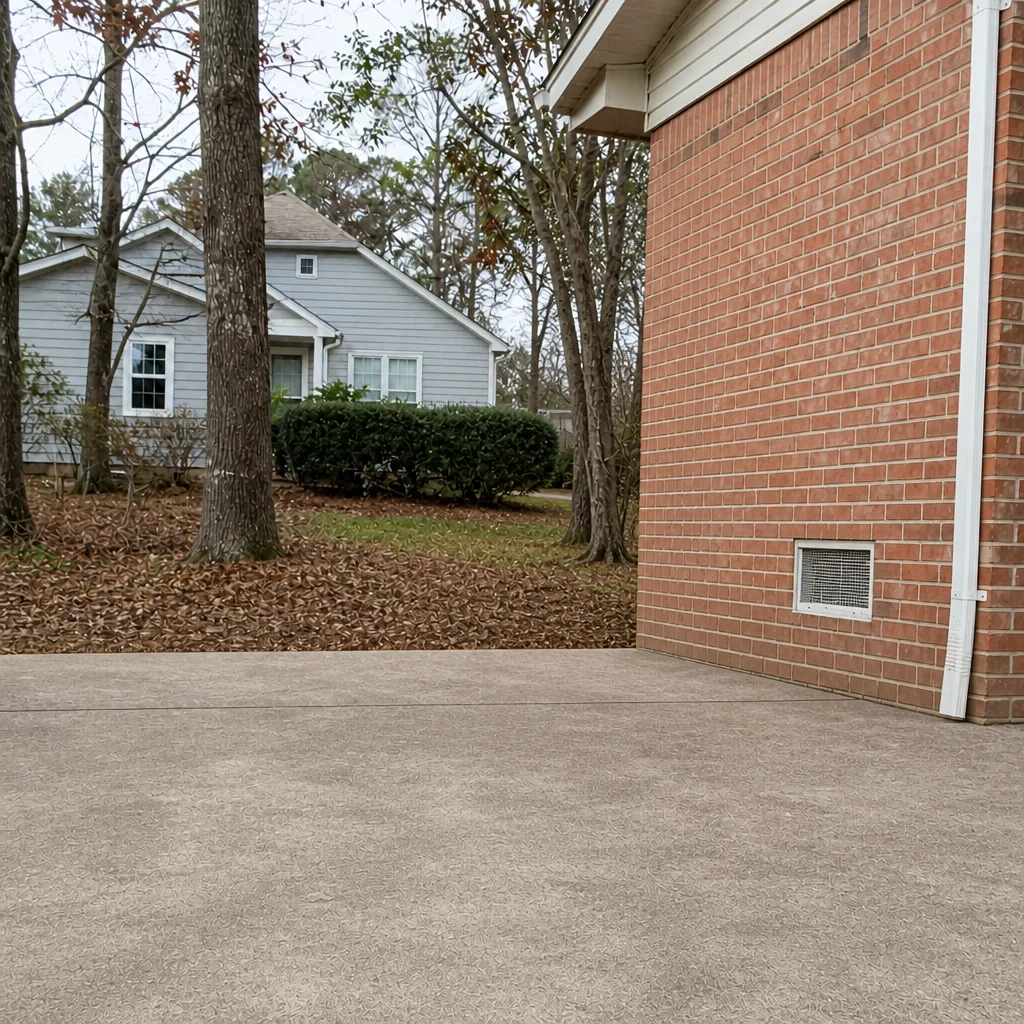 After
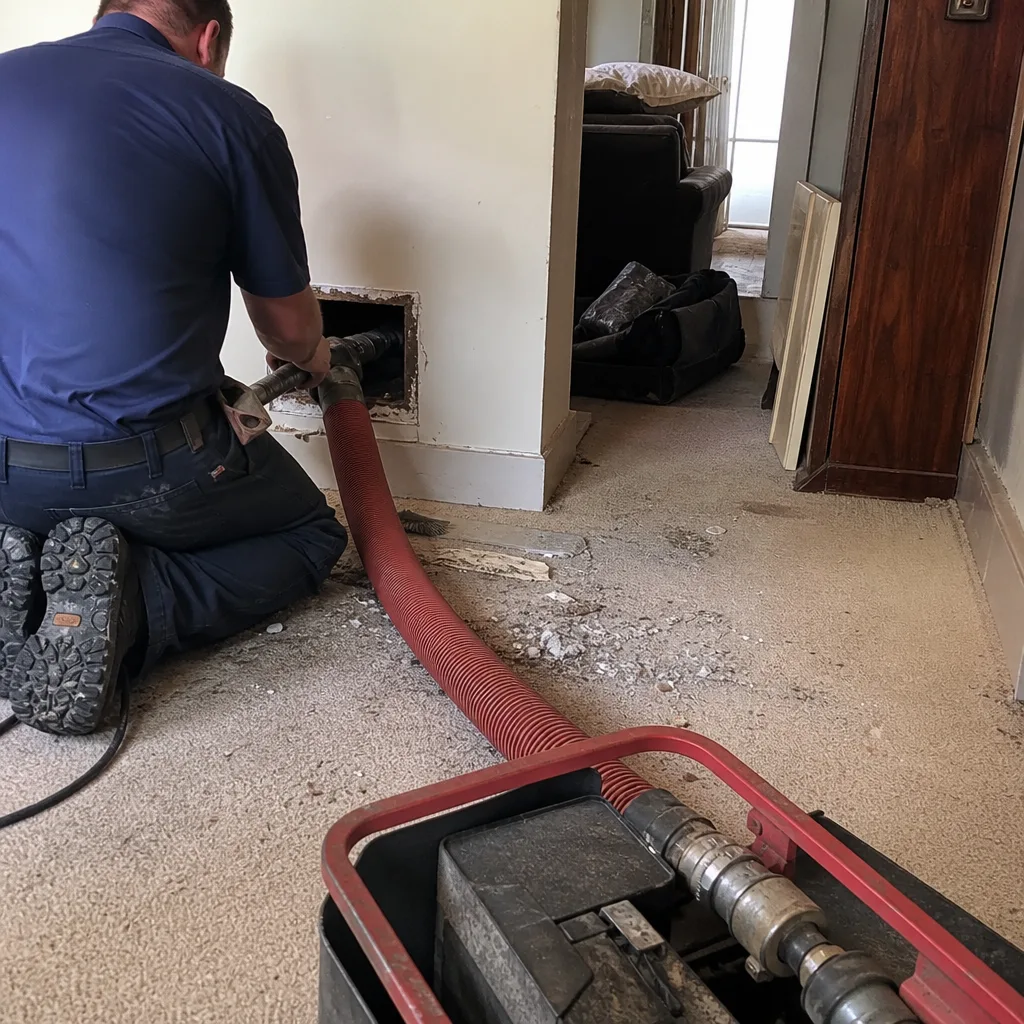 Before
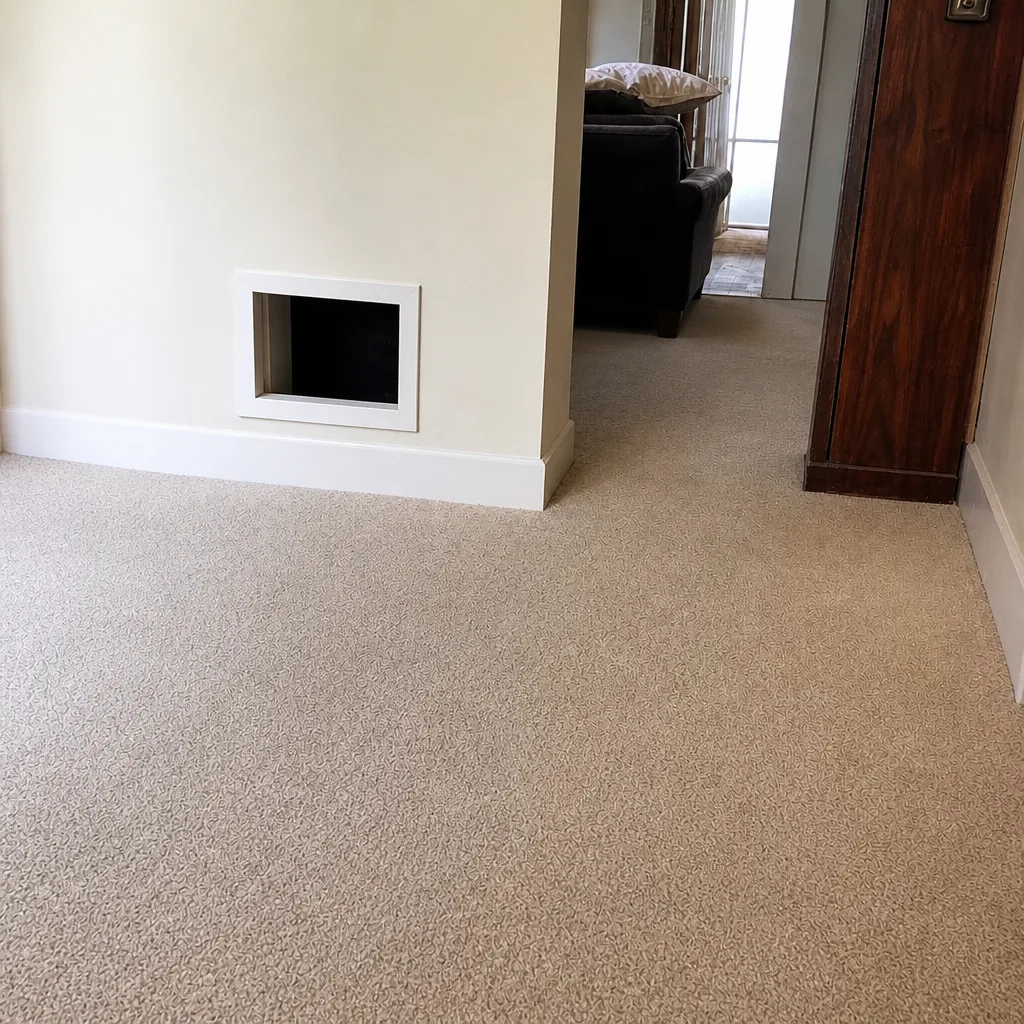 After
When to Call a Professional
A cleaning is worth scheduling when specific conditions show up, rather than on a fixed calendar. You should call a professional when you’re seeing allergic symptoms that flare up indoors and improve when you leave the house; when a musty or dust-tinged smell comes from the registers, especially after the system has been running; when airflow to some rooms is noticeably weaker than to others; when visible dust collects at the register covers more quickly than it used to; when the home has had recent renovation and construction dust has been pulled through the system; or when the system hasn’t been serviced in several years and the home was built in the 1970s through 1990s, which is most of the stock in these neighborhoods. If you’re unsure whether it’s worth doing, the worst outcome is a free inspection.
Air Duct Cleaning Lake Jeanette offers free estimates in Lake Jeanette – call (877) 792-7174. We answer 24/7. Fast dispatch from 7am to 7pm, Sunday through Friday.
Frequently Asked Questions
A full-system cleaning in Lake Jeanette is priced per job, not per vent, and the typical range depends on system size, duct material, access, and whether sanitizing is included. A written estimate is provided before any work begins, and that estimate sets the final price. Call (877) 792-7174 for an exact quote – estimates are free.
Timing depends on the home, not a universal schedule. In Lake Jeanette’s humid climate, a system with flex duct, a return drawing from a crawl space, or recurring allergy symptoms will need cleaning more often than a sealed system in conditioned space. Homes with pets, recent renovation, or heavy dust visible at the registers should be inspected sooner. If it’s been several years and you’re not sure, a free inspection will tell you. Call (877) 792-7174 to schedule one.
Cheaper quotes almost always exclude the return plenum, the air handler coil, and the drain pan, which is where most of the actual contamination sits. Others may skip the HEPA vacuum connection and simply blow dust through the system. A complete job worth comparing includes source-removal cleaning of the entire system, before-and-after photos, and a written scope. Call (877) 792-7174 for a quote that covers the full scope.
Ask for before-and-after photos of your own ducts, confirm whether a HEPA vacuum was connected to the system during cleaning, and confirm that the return plenum and air handler were in scope. Verifiable work comes with verifiable evidence. Call (877) 792-7174 for a free estimate that includes a written scope.
Yes, and it’s the single most understated factor. Summer dew points above 65°F mean moisture persists on the evaporator coil and in return ductwork, which is ideal for biological growth. A cleaning address in a drier climate might last longer between services than the same cleaning here. This is why filtration and humidity control are worth discussing at the same time. Call (877) 792-7174 for a full walk-through of your system.
Yes. Cleaning and clearing dryer vents is part of the full indoor air quality scope, and it’s the most overlooked fire-safety item in most homes. A dryer vent packed with lint is also a moisture problem, which compounds in a humid climate. Call (877) 792-7174 to add dryer vent cleaning to a whole-system job.
The Bottom Line
Air duct cleaning in Lake Jeanette is not a universal service. The clay-heavy soil, summer humidity, and mixed housing stock here each create their own contamination profile, and a cleaning protocol written elsewhere won’t address any of them. What you’re buying is contact cleaning of the entire system, supply and return, with HEPA containment and attention to the air handler and drain pan, plus before-and-after documentation of your own ducts. A written scope agreed before work starts is the single best protection against a partial job. Ask the questions in this guide. If the answers don’t hold up, call us instead: we’re reachable at (877) 792-7174, we answer 24/7, and fast dispatch runs from 7am to 7pm, Sunday through Friday. The full indoor air quality chain runs from duct to dryer vent, and it’s all in one place. For the broader service page, see Air Duct Cleaning Lake Jeanette, for the HVAC side see HVAC cleaning, and for the setup behind the ducts see our guide to HVAC cleaning coverage in Lake Jeanette.
Call (877) 792-7174 for a free estimate.
Written by the team at Air Duct Cleaning Lake Jeanette.