
Air Duct Cleaning: Repair or Replace? How Lake Jeanette Homeowners Decide
Most Lake Jeanette homeowners ask this question backwards. They want to know whether to clean or replace, but neither answer means much until someone measures how leaky the duct system actually is. Cleaning a system with a 40% leakage rate doesn’t improve your air quality. It cleans the inside of a duct network that’s pulling unconditioned crawl space air in through every failed joint while it runs. Leakage rate first, decision second. Here’s the framework we use, and the one you can use to judge any quote you get.
If you’d rather have someone measure it for you, call (877) 792-7174.
Why Leakage Testing Comes Before Any Cleaning or Replacement Decision
Duct leakage testing measures how much air escapes the system between the air handler and the registers. A technician seals the registers, pressurizes the ductwork with a calibrated fan, and reads the airflow needed to hold a set pressure. That number, expressed as a percentage of total system airflow, tells you whether the ductwork is a delivery system or a sieve.
This matters because cleaning and replacement solve different problems. Cleaning removes accumulated debris from surfaces inside the ducts. Replacement fixes the structure of the ductwork itself. If the structure is sound and the contamination is surface-level, cleaning is the answer. If the structure is failing, cleaning is money spent on a system that will keep leaking crawl space air into your living room.
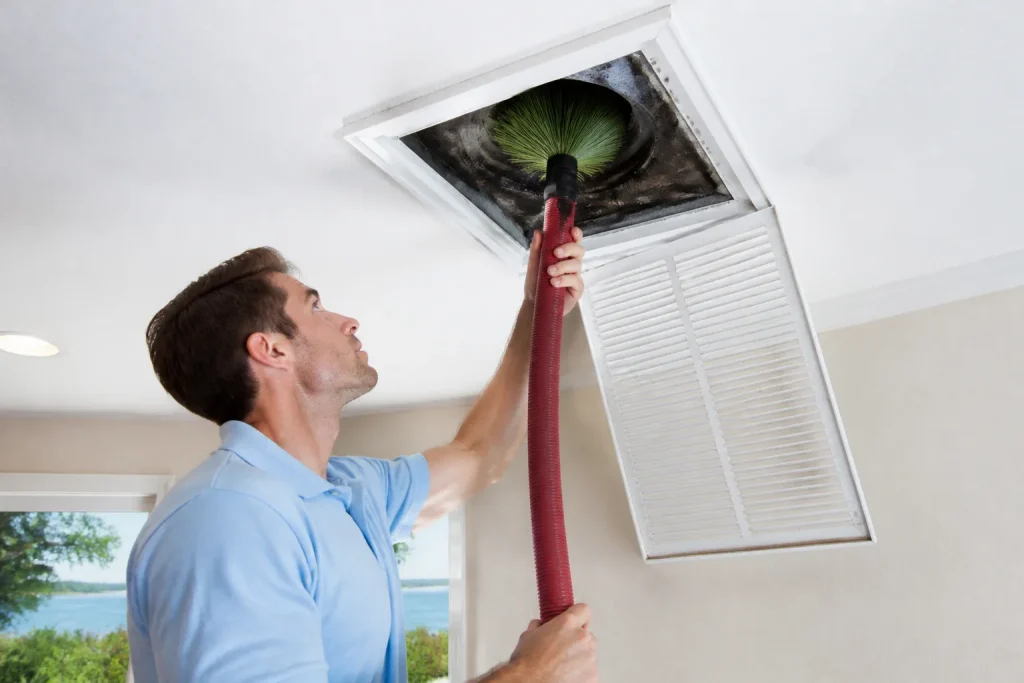
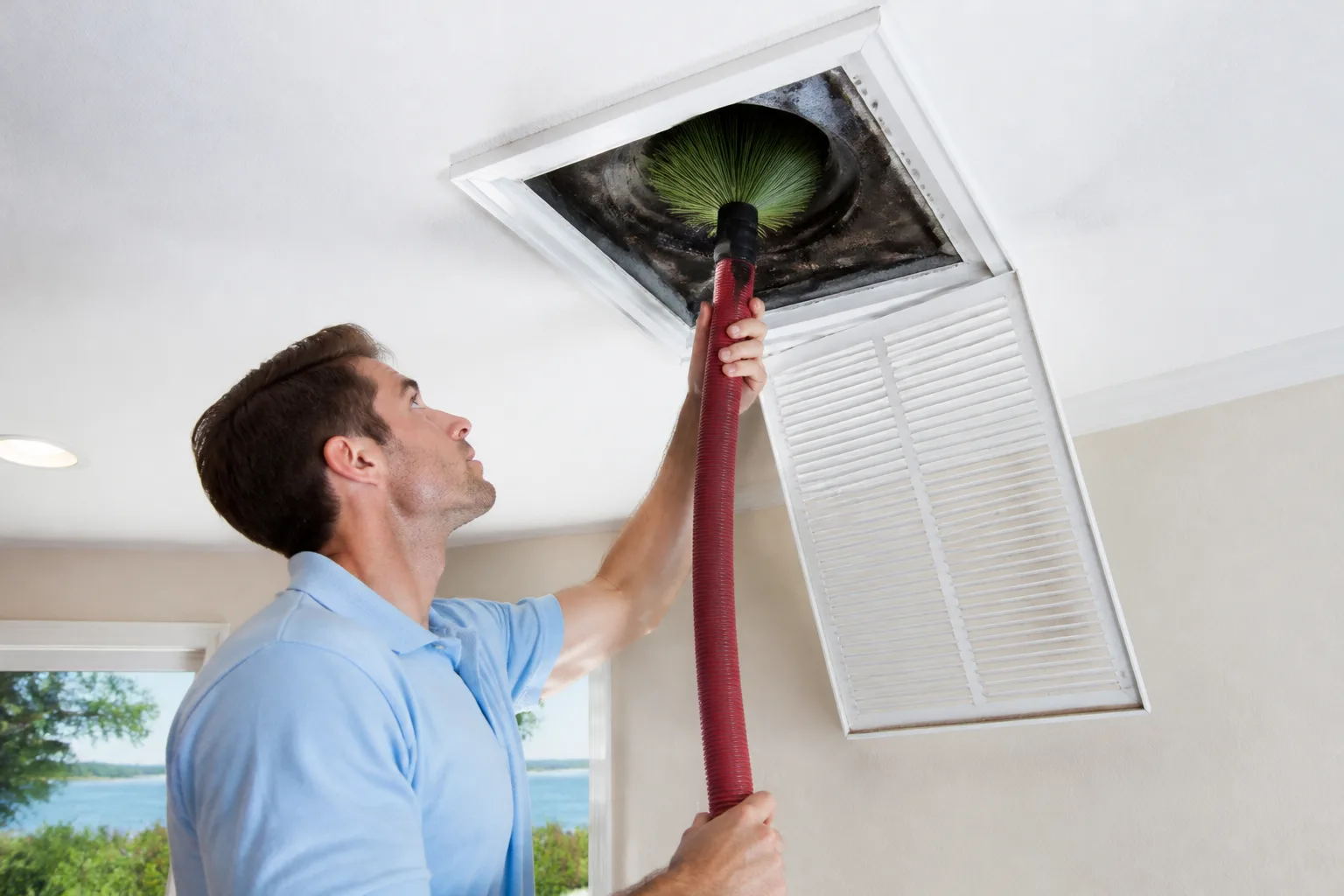
We use Rotobrush contact-cleaning equipment with simultaneous HEPA extraction, and Nikro HEPA vacuums rated for fine particulate capture. That equipment does excellent work on a sound duct system. It cannot fix a joint that has separated inside a wall cavity. Nobody’s brush can.
- Under roughly 10% leakage: the duct structure is doing its job. Cleaning is the likely path.
- 10% to 25% leakage: sealing plus cleaning usually makes more sense than replacement.
- Over 25% leakage: the system is losing a serious share of the air you’re paying to condition. Expect a replacement conversation about specific runs, not necessarily the whole system.
Those thresholds are general guidance, not code. The right call depends on where the leakage is and what condition the duct material is in.
When Cleaning Is the Right Call in Lake Jeanette
Cleaning is the correct answer when the duct runs are structurally intact, leakage is low, and the problem is contamination rather than deterioration. That describes a good share of the homes we assess in Lake Jeanette, particularly where the ductwork has been sealed at the joints at some point and the system hasn’t been disturbed by major renovation.
The conditions that point to cleaning:
- Duct runs are continuous and properly supported, with no sagging or crushed sections.
- Leakage testing comes back low, meaning the system is delivering air where it should.
- The contamination is biological or particulate: dust buildup, musty odor, visible debris at the registers, or post-construction dust after a remodel.
- Airflow is uneven between rooms for reasons other than collapsed or disconnected ductwork.
- Nobody has serviced the system in years and the ducts simply need contact cleaning.
In those cases, brush-and-extract cleaning with HEPA containment is the whole job. On the finishing side, we use Guardsman-grade protective products during sanitizing, and we can install Aprilaire filtration or humidity control in the same visit if the assessment shows the air quality needs more than cleaning alone. Cleaning a sound system is straightforward, scheduled work. It’s not an emergency, and anyone rushing you into it should make you suspicious.
When Replacement Is the Only Answer
Replacement becomes necessary when the duct material itself has failed, not just collected dirt. The most common culprit in this part of North Carolina is flex duct. It’s inexpensive, quick to install, and it degrades faster than rigid ductwork when it lives in a crawl space.
The conditions that force replacement:
- Flex duct deterioration: the inner liner tears, the outer jacket separates, and the insulation breaks down. Once the liner is compromised, cleaning can’t restore it.
- Joint failure: taped and mastic-sealed joints that have let go, especially where flex duct meets a trunk line or a boot.
- Collapsed sections: flex duct that has sagged, kinked, or been crushed underfoot or by stored items in the crawl space.
- Inaccessible contamination: debris or biological growth in sections that can’t be reached with cleaning equipment without cutting into the system anyway.
When flex duct has deteriorated to that point, replacing the failed runs is usually less expensive than repeated cleaning attempts on ductwork that will keep failing. Replacing the problem runs and then cleaning the sound remainder is a common, sensible middle path.
Partial Replacement: The Option Most Quotes Skip
Most homeowners assume the choice is all or nothing. It rarely is. Replacing the return air plenum or a handful of specific runs while cleaning the rest of the system is frequently the most cost-effective path, and it’s the option a lot of quotes never mention because it’s more work to scope.
Here’s how a partial replacement typically breaks down:
- Leakage testing identifies where the losses are. A single failed trunk connection or a collapsed run can account for most of the system’s leakage.
- The worst runs get replaced. Return plenums and any flex runs with torn liners or failed joints come out first, because they move the most air.
- The sound remainder gets contact-cleaned. Rotobrush brushing with HEPA extraction handles the runs that are structurally fine.
- Joints get sealed. Duct sealing closes the gaps that remain so the air you condition stays in the ducts.
This is where having one company that covers cleaning, repair and sealing matters. If your cleaning company can’t assess duct integrity, and your HVAC contractor doesn’t clean ducts, you end up coordinating two scopes of work that should have been one decision. We’d rather scope the whole thing once, with the equipment and the assessment in the same set of hands.
How Lake Jeanette’s Crawl Spaces and Humidity Shorten Flex Duct Life
Lake Jeanette sits in the North Carolina Piedmont, and almost every home here with ductwork in the crawl space deals with the same two forces: summer humidity and unconditioned air under the floor. Together they wear flex duct down faster than most homeowners expect.
The mechanism is simple. Summer air in this region carries heavy moisture. Flex duct insulation that stays damp loses its insulating value and its outer jacket breaks down. The inner liner of flex duct, once exposed to sustained humidity and airborne dust, becomes brittle and tears. Every tear is another leak. Every leak pulls more humid crawl space air into the system, which raises the humidity inside the duct further. It’s a slow feedback loop, and it accelerates whenever the crawl space has no vapor barrier or no dehumidification.
What this means for replacement timelines in Lake Jeanette:
- Unsealed crawl spaces with uninsulated flex duct age out considerably faster than encapsulated ones.
- Homes built with flex duct in unconditioned crawl spaces tend to reach replacement territory earlier than homes with rigid trunk lines.
- Vapor barriers and crawl space moisture control extend duct life and are worth doing alongside any replacement.
- If you’ve gutted a crawl space or dealt with water intrusion, have the ductwork inspected before assuming it’s fine.
The takeaway: the soil and moisture conditions under your house are part of your duct system’s life expectancy. A quote that ignores crawl space conditions is a quote written blind.
When to Call a Pro
Some parts of this you can evaluate yourself. You can look at your registers, note which rooms are stuffy, and check whether the crawl space has standing moisture. You cannot safely assess duct integrity by crawling through the crawl space and cutting open flex duct. You shouldn’t test leakage without calibrated equipment, and anything involving the air handler or electrical connections inside it belongs to a trained professional.
Call a professional when you notice:
- Uneven airflow between rooms that has gotten worse over time
- Musty or dusty odors when the system runs
- Visible dust streaks around the registers or on the grilles
- Allergy symptoms that worsen when the HVAC system is on
- Ductwork that hasn’t been assessed since the home was built
Related services in Lake Jeanette: if the assessment points toward air duct cleaning, HVAC cleaning, or a duct repair and sealing scope, we can combine those into a single visit rather than three. If your dryer vent hasn’t been cleared, add dryer vent cleaning to the same appointment while the equipment is already set up. That covers the full chain from duct to dryer vent, and the home’s indoor air quality benefits from all of it done together.
The Bottom Line
Cleaning and replacement are sequential decisions, not competing ones. Measure leakage first. If the duct runs are sound and the contamination is on the surface, clean it. If flex duct has deteriorated, joints have failed, or sections have collapsed, replace those runs and clean the rest. Partial replacement is often the honest answer, even though it’s the one that takes more scoping.
- Leakage testing is the foundational measurement. Ask for it before you commit to anything.
- Low leakage plus surface contamination equals cleaning.
- Deteriorated flex duct, failed joints, or collapsed runs equal replacement of those runs.
- Crawl space humidity in Lake Jeanette shortens flex duct life considerably. Fix moisture issues alongside the ductwork.
- Anyone quoting a whole-system cleaning without checking duct condition is guessing.
Our technicians have up to 13 years of experience assessing and cleaning duct systems, and we carry the equipment to test, clean, seal, and replace defective runs. If you’re in Lake Jeanette and need help deciding which path fits your home, Air Duct Cleaning Lake Jeanette offers free estimates: call (877) 792-7174. We answer 24/7. Fast dispatch from 7am to 7pm, Sunday through Friday.
Frequently Asked Questions
You can’t know until leakage is tested. If the duct runs are intact and leakage is low, cleaning is the right call. If flex duct has deteriorated, joints have failed, or sections have collapsed, replacement of those runs is necessary. Call (877) 792-7174 to schedule a free estimate and a leakage assessment.
Very common, especially in older crawl-space installations with high summer humidity. Flex duct liners tear, insulation breaks down, and joints separate over time. Encapsulated crawl spaces slow this down considerably. An inspection tells you where your ductwork stands.
You can, but you’ll be cleaning a system that may be pulling crawl space air through failed joints while it runs. That defeats part of the purpose. The leak test determines whether cleaning alone will actually improve your air quality.
Usually, yes. Replacing the return plenum and the worst flex runs while cleaning and sealing the sound remainder often costs far less than a full replacement and resolves the actual leakage. Ask any contractor whether a partial scope applies to your home before signing a full-replacement quote.
Written by the team at Air Duct Cleaning Lake Jeanette.
Need Air Duct Cleaning Help?
Call Air Duct Cleaning Lake Jeanette - the local pro we connect you with is licensed and insured, here with fast help in Lake Jeanette.
(877) 792-7174