
Last updated November 24, 2026
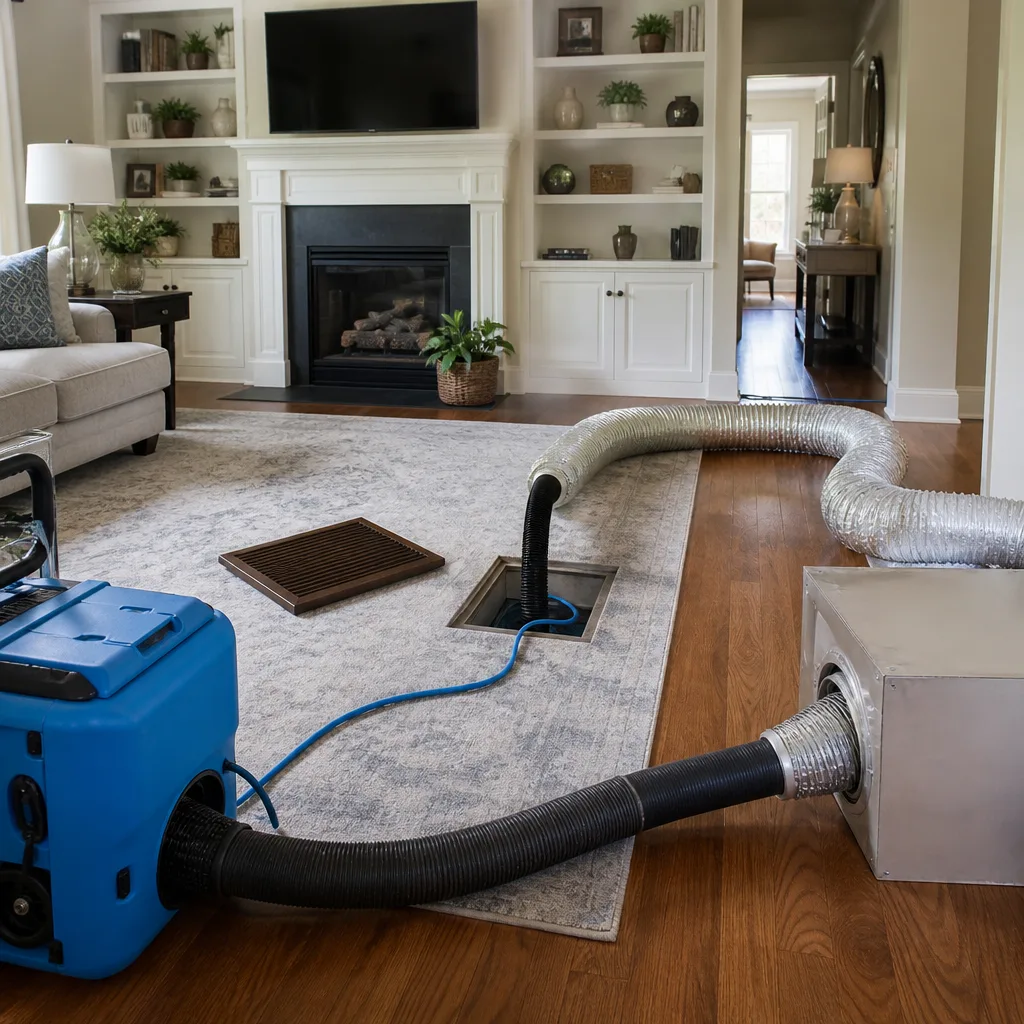 Whole-home duct cleaning
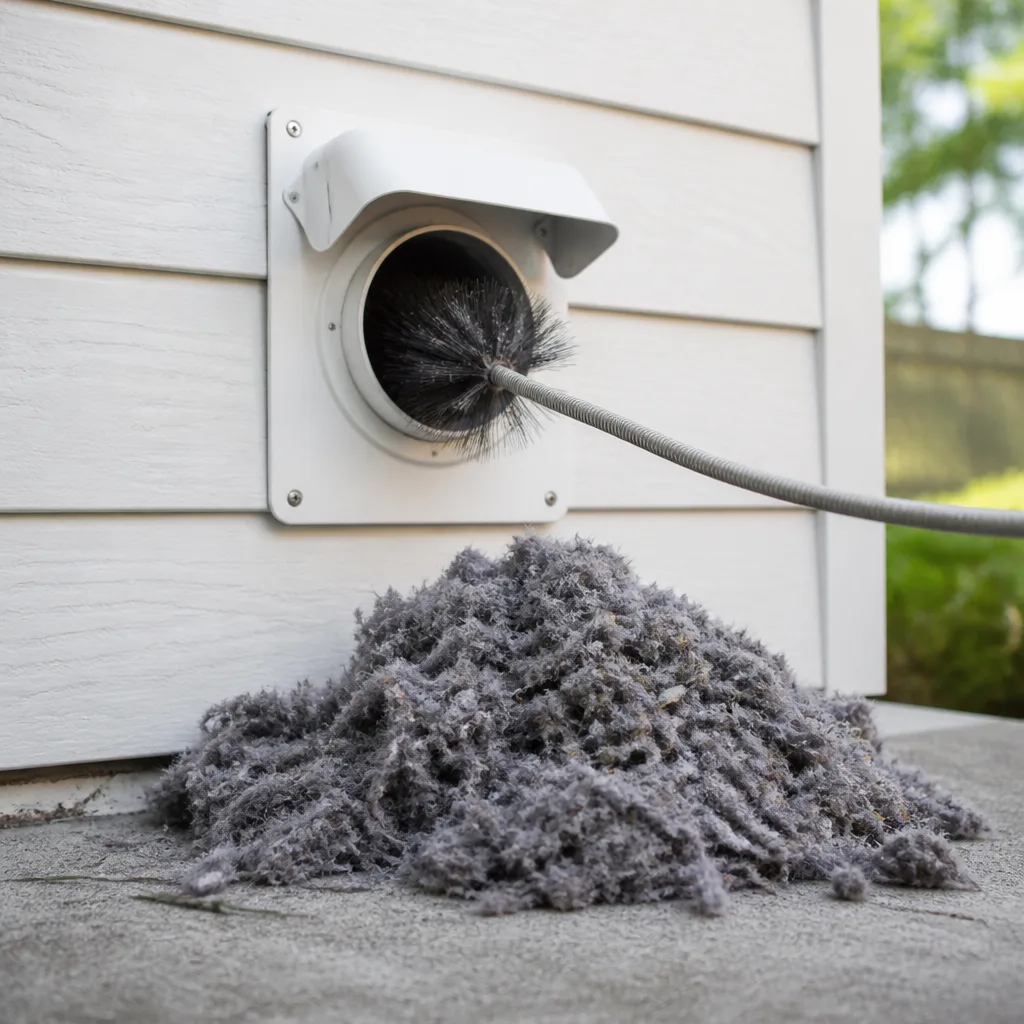 Dryer vent cleaning
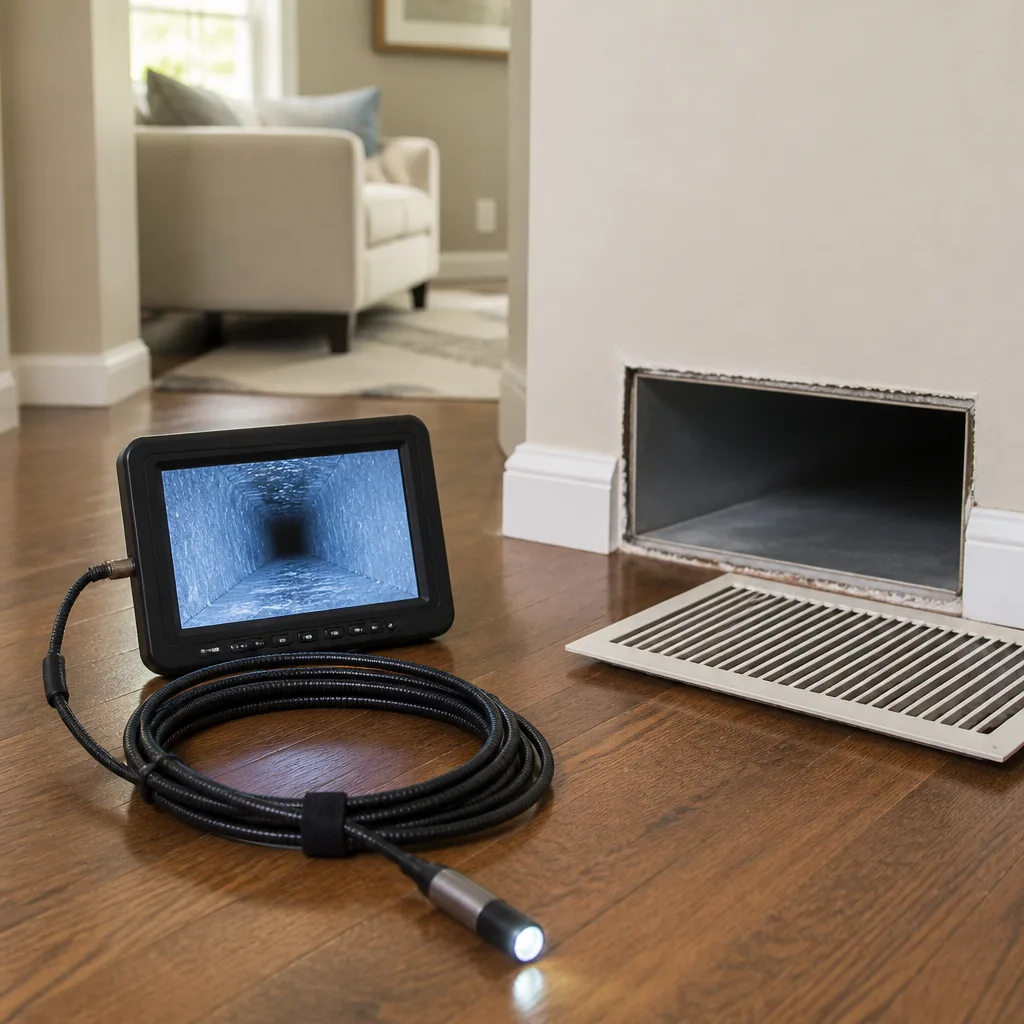 Camera inspection
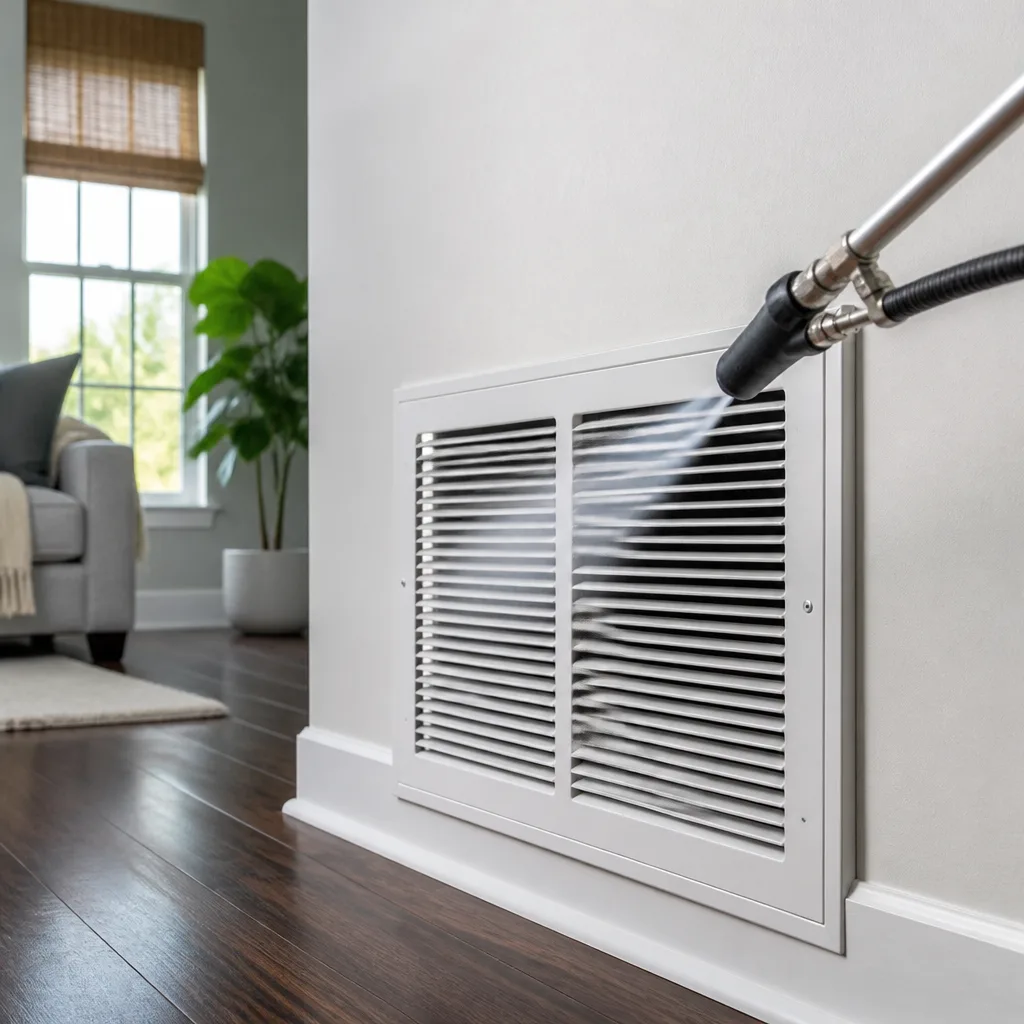 Sanitizing & deodorizing
Whole-system duct and dryer vent check with before-and-after photos - you see exactly what came out of your vents
That "$99 whole-house special" is a bait ad - the real number appears once they are in your hallway, or the "clean" is a shop-vac at the register. We photograph the inside of your ducts before and after instead.
DIY vs Professional Air Duct Cleaning: The Lake Jeanette Homeowner’s Decision Guide
A shop vac pulls roughly 50 to 100 cubic feet of air per minute. A professional duct cleaning system moves 3,000 to 10,000. That gap is the whole argument. You can’t close it with a longer hose, a clever brush attachment, or more effort on a step stool. Duct cleaning looks like vacuuming because both involve suction, but the physics are different, and the debris you’re after isn’t sitting loose on a floor. In this guide we’ll walk through what consumer equipment physically can and can’t do, the maintenance tasks Lake Jeanette homeowners can legitimately handle themselves, the specific ways DIY attempts damage ductwork, and how to run an honest cost comparison instead of comparing a rental fee to a service invoice.
Quick Answer
For most Lake Jeanette homes, DIY air duct cleaning can’t achieve a real clean because consumer vacuums lack the negative pressure and mechanical agitation needed to break bonded particulate off duct walls and capture it at the same time. Homeowners can and should handle register cleaning, filter changes, dryer vent lint removal, and visual inspections between professional visits. Full-system cleaning, sealing, and anything involving crawlspace returns or mold-adjacent conditions belongs with professional equipment.
Styles & brands we work with
- Whole-home duct cleaning
- Dryer vent cleaning
- Camera inspection
- Sanitizing & deodorizing
Table of Contents
- The Physics of Duct Contamination: Why “Vacuuming” Isn’t Cleaning
- What Lake Jeanette Homeowners Can Legitimately Do Themselves
- Where DIY Attempts Go Wrong: Three Ways Ducts Get Damaged
- The Crawlspace Access Factor in Lake Jeanette Homes
- The Honest Cost Comparison: Rental vs Professional
- Agitation and Extraction Have to Happen Together
- How to Inspect Your Own Ducts Without Touching Them
- A Step-by-Step Decision Framework
The Physics of Duct Contamination: Why “Vacuuming” Isn’t Cleaning
Dust in a return duct doesn’t behave like dust on a shelf. It bonds. Two forces hold it to the metal or flex liner: static charge and moisture. Static builds up as air moves through the system, and it pulls fine particles against the duct wall like a balloon on a sweater. Moisture, especially in a humid Piedmont summer, turns that loose layer into something closer to a film. Once particulate is bonded, suction alone mostly passes over it. The airstream slides across the surface and carries only what’s already loose.
Breaking that bond takes mechanical energy. A rotating brush head physically contacts the duct wall, agitates the layer, and releases particles into the airstream. That’s why professional systems pair two things at once: a rotating contact brush and a high-capacity HEPA-rated vacuum pulling negative pressure on the whole run. The extraction has to be running the moment the brush frees the debris, or the debris simply settles back down the line.
- Static-bonded dust needs physical contact to release. Airflow alone won’t lift it.
- Moisture-set film needs agitation plus capture. Brush without vacuum just redistributes it.
- Fine particulate (the sub-10-micron fraction that matters for allergy symptoms) needs HEPA-rated filtration on the collection end, or it ends up in the room air.
This is the same principle remediation contractors apply to any contaminated surface: disturb mechanically, capture simultaneously. When we run an air duct cleaning job, the Rotobrush contact brush and Nikro HEPA collection work as one system for exactly this reason. One without the other is theater.
What Lake Jeanette Homeowners Can Legitimately Do Themselves
Plenty of duct-system maintenance is well within reach and matters more than people think. The trick is knowing where the boundary sits. Anything at the register, the filter slot, or the accessible section of a dryer vent is fair game. Anything past the boot (the transition from register to main trunk) is where consumer equipment stops being effective and starts being risky.
- Clean the supply registers. Pop the grilles off, wash them in a sink with mild soap, and vacuum the boot opening with a crevice tool. Grilles catch a surprising amount of household dust and pet hair. This alone improves visible cleanliness.
- Upgrade and change filters on schedule. A higher-MERV filter captures more fine particulate at the air handler, which reduces what reaches the ducts downstream. Check monthly and replace per manufacturer recommendation.
- Clear the dryer vent run you can reach. Disconnect the vent at the back of the dryer, pull out lint with a flexible brush, and clear the exterior flap of obstructions. Lint is a fire hazard, so this is worth doing regularly. The full-length run past the wall is a different job.
- Do visual inspections. Look into return grilles with a flashlight. Note dust buildup, moisture stains, or musty smell. Take photos and date them so you have a baseline.
- Keep returns unobstructed. Furniture, rugs, and storage shouldn’t block return grilles. Restricted return airflow increases static pressure and pulls more dust into the system.
These tasks genuinely help, and they’re the ones we tell Lake Jeanette homeowners to keep up with between professional visits. They don’t replace a full cleaning, but they extend the interval.
Where DIY Attempts Go Wrong: Three Ways Ducts Get Damaged
Improvised tools meet ductwork at bad angles, and ductwork is thinner than most people expect. Three failure modes come up again and again.
1. Flex duct perforation
Flexible duct has a thin inner liner inside a wire helix, and it’s easy to tear. A shop vac brush or a DIY plumbing snake dragged through a flex run catches a wire coil and opens the liner. Once the liner is perforated, conditioned air leaks into a crawlspace or wall cavity instead of reaching the room. That’s an energy loss and a moisture problem, not just an efficiency ding.
2. Liner disturbance releasing fiberglass
Some older duct runs have internal insulation or fiberglass liner board. Abrasive or aggressive agitation can break that lining loose, and the released fibers end up in the airstream feeding your rooms. This is precisely the outcome a homeowner was trying to prevent. Professional equipment is designed for controlled contact with the liner material; a shop vac is not.
3. Mold disturbance without containment
If there’s visible mold in a duct run, agitating it in an open room spreads spores into the living space. This is the point where the equipment matters most. Remediation professionals use containment and HEPA filtration as a system, and the same standard applies to a duct run with mold-adjacent conditions. Disturbing it without that setup is a real health risk.
None of these failures are dramatic. They’re quiet. A small tear, a bit of fiberglass, a puff of spores, and then months of wondering why the symptoms got worse. That’s the honest risk of DIY duct cleaning past the register boot.
The Crawlspace Access Factor in Lake Jeanette Homes
Many Lake Jeanette homes were built with belly-mounted return systems. The return trunk runs through the crawlspace, under the floor structure, often tucked between joists or strapped to the underside of the subfloor. This is a normal, entirely serviceable design, but it creates a specific problem for any homeowner considering DIY.
To actually clean a belly-mounted return, you have to reach it. That means crawling under the house, navigating joists, plumbing, and wiring, and working in a confined dark space with low headroom. The duct runs are long and sometimes partially buried in insulation. A shop vac hose has to be dragged the length of the run and maneuvered into awkward angles. Most homeowners are understandably not going to do that, and the setup also makes effective cleaning difficult even with good intentions.
- Low clearance means you can’t stand, kneel comfortably, or reposition quickly.
- Return runs fan out in multiple directions under the floor, multiplying the distance you’d have to cover.
- Insulation, moisture barriers, and piping obstruct access to the duct surface.
- Working in a basement or crawlspace with limited lighting adds injury risk and slows the process.
This is the place where DIY duct cleaning in Lake Jeanette stops being a question of equipment and becomes a question of physical practicality. Even a homeowner with a good shop vac, a flexible brush kit, and a willingness to put in a long afternoon will find that access alone rules out a thorough job on a belly-mounted return. The relevant rule of thumb: if the duct surface isn’t reachable with a flashlight beam and a hand, it’s a professional job.
The Honest Cost Comparison: Rental vs Professional
A rental comparison looks cheap on paper. It also leaves out most of the cost. The fair question isn’t “rental fee vs service price.” It’s “total cost and total outcome of each option.”
What the DIY path actually costs
- Equipment rental. A shop vac or rental vacuum isn’t free for a full day. Add a hose or brush kit and the number climbs.
- Time. A full-system cleaning pass takes hours even with a helper. Many homeowners burn a full afternoon plus a trip to the hardware store.
- Incomplete scope. The belly-mounted returns, the air handler coil, the dryer vent run past the wall, and the trunk lines all need to be addressed. A DIY pass on registers and accessible boots leaves most of the system untouched.
- Re-clean risk. If the attempt loosens debris into the system without capturing it, or creates a liner tear, the follow-up professional visit costs more than the original would have.
- Filter and register deflection. Some homeowners turn up filter MERV ratings and close supplies to work around perceived airflow issues, which can increase static pressure and shorten blower life.
What a professional job includes
- Full coverage of every supply, every return, the trunk lines, and the accessible sections of the belly-mounted return system.
- Contact agitation and simultaneous HEPA extraction on each run, so bonded debris is released and captured in the same pass.
- One flat price per system, agreed before work starts, with before-and-after photos of the homeowner’s own ducts so there’s no guessing whether the work happened.
Compare total cost to total outcome, not just the first number. Call (877) 792-7174 for an exact quote if you’d like to see where the professional option actually lands for your Lake Jeanette home. Estimates are free.
Agitation and Extraction Have to Happen Together
This is the difference that most DIY approach gets wrong, even when the homeowner has decent equipment. The cleaning sequence isn’t “brush, then vacuum.” Those steps have to run at the same time, in the same spot, or the job fails halfway through.
Picture brushing a wall. You free a layer of dust. If a vacuum isn’t pulling at that exact spot at that exact moment, the dust drifts, settles on nearby surfaces, or reattaches downstream. In a duct run, downstream means “the rest of the system you were trying to clean.” The brush frees particles; the vacuum has to catch them before they redeposit. Sequential steps guarantee you spread the problem.
Professional systems are built around this constraint. The Rotobrush contact brush and a Nikro HEPA-rated vacuum run as a paired unit. Abatement Technologies containment equipment plays the same role for larger jobs, particularly post-construction dust or mold-adjacent work. The extraction capacity behind the brush is what makes simultaneous agitation and capture physically possible, and that’s the piece that can’t be replicated in a homeowner’s setup.
We’ve run this method across the full range of Lake Jeanette homes, from single-story ranch layouts to two-story builds with longer trunk lines, and the principle doesn’t change with house style. Same contact brush, same HEPA-rated collection, same timing. That’s why we keep the equipment standard consistent rather than adapting a lighter setup per house.
How to Inspect Your Own Ducts Without Touching Them
You don’t need to dismantle anything to know whether your ducts need attention. Visual and sensory inspection is honest, safe, and usually conclusive. Here’s a short checklist.
- Look inside supply registers. Use a flashlight. Visible dust caking on the boot walls or a dark film on the duct surface is a signal, not just a grille problem.
- Check return grilles for debris buildup. Returns pull air toward the system, so they catch more than supplies. A heavy layer on the grille usually means heavier accumulation behind it.
- Note odors when the system starts. A musty or “dirty sock” smell in the first minutes after the blower starts is a strong indicator of moisture or biological growth somewhere in the system.
- Watch for uneven airflow. A room that’s consistently cooler or warmer than the rest of the house, or a supply that feels weak when others feel strong, may point to a restricted or partly blocked duct.
- Check around the air handler. Look for dust accumulation, moisture stains, or visible biological growth on the coil or in the plenum.
- Track allergy symptom patterns. If symptoms improve when away from home and worsen when the system runs, that’s worth a professional look. Not a diagnosis, just a reason to inspect.
If any of these signals are present, the next step isn’t a rental shop. It’s a proper inspection and an estimate. A homeowner can safely note what they see; they can’t safely fix a mold-adjacent duct problem in an open room.
A Step-by-Step Decision Framework
Run through this in order. Each question narrows the answer quickly.
- Is the ductwork reachable with a flashlight and a hand? If yes, and the visible buildup is confined to the register grille, DIY register cleaning is reasonable.
- Are there belly-mounted returns in a crawlspace? If yes, DIY past the boot is impractical. Professional access is required for meaningful coverage.
- Is there visible mold, moisture staining, or persistent musty odor? If yes, stop. This is a containment job. Do not disturb the surface. Call a professional.
- Is the ductwork flexible with a thin inner liner? If yes, the risk of DIY perforation is real. Avoid improvised brushes in those runs.
- Is the HVAC equipment part of the concern? The coil, plenum, and blower are part of the air path. A hvac cleaning job addresses those components; a register-cleaning pass does not.
- Is the dryer vent involved? Short accessible runs can be cleared by the homeowner. The full run, especially where it exits a wall or roof, is a dryer vent cleaning job, and worth doing because of lint fire risk.
- Do you have photos and a written scope? Whatever you choose, ask for before-and-after photos. On a DIY attempt, take your own photos before and after every step. Documented scope is what makes the next decision easy.
Most Lake Jeanette homes with belly-mounted returns, flexible runs, or any sign of moisture will end up at step 2 or 3 within a few minutes. That’s useful information to have before renting anything. It’s also where we’d start if we were assessing a home in Lake Jeanette ourselves. When the process starts cleanly with a real inspection, the right answer usually surfaces fast.
Common Mistakes to Avoid
- Using a shop vac without HEPA-rated filtration on the exhaust. A standard shop vac can blow fine particulate back into the room instead of capturing it. In a home with allergy sensitivities, that’s the opposite of the goal.
- Running a brush through flex duct without checking liner condition first. A brush catches a wire coil easily and tears the inner liner. In Lake Jeanette homes with belly-mounted returns, that liner runs under the floor where you can’t see the tear until the airflow problem shows up.
- Disturbing visible mold without containment. Agitating a mold-affected surface in an open room spreads spores. If you see mold, don’t start. Call a professional.
- Assuming register cleaning equals duct cleaning. A clean grille with dirty ductwork behind it looks fine and isn’t. The grille is the visible 5% of the system.
- Skipping the airflow check after DIY. Run every room’s supply and return and compare. If one room feels weaker than before, a liner or connection may have been disturbed.
- Closing off supply registers to “balance” airflow. This raises static pressure on the blower and can shorten equipment life. It also doesn’t fix dirty ducts.
- Overlooking the dryer vent. Lint buildup in a dryer vent is a fire hazard and easy to forget during a duct project. If you’re already in the crawlspace, take a look at the dryer vent run too.
See the difference
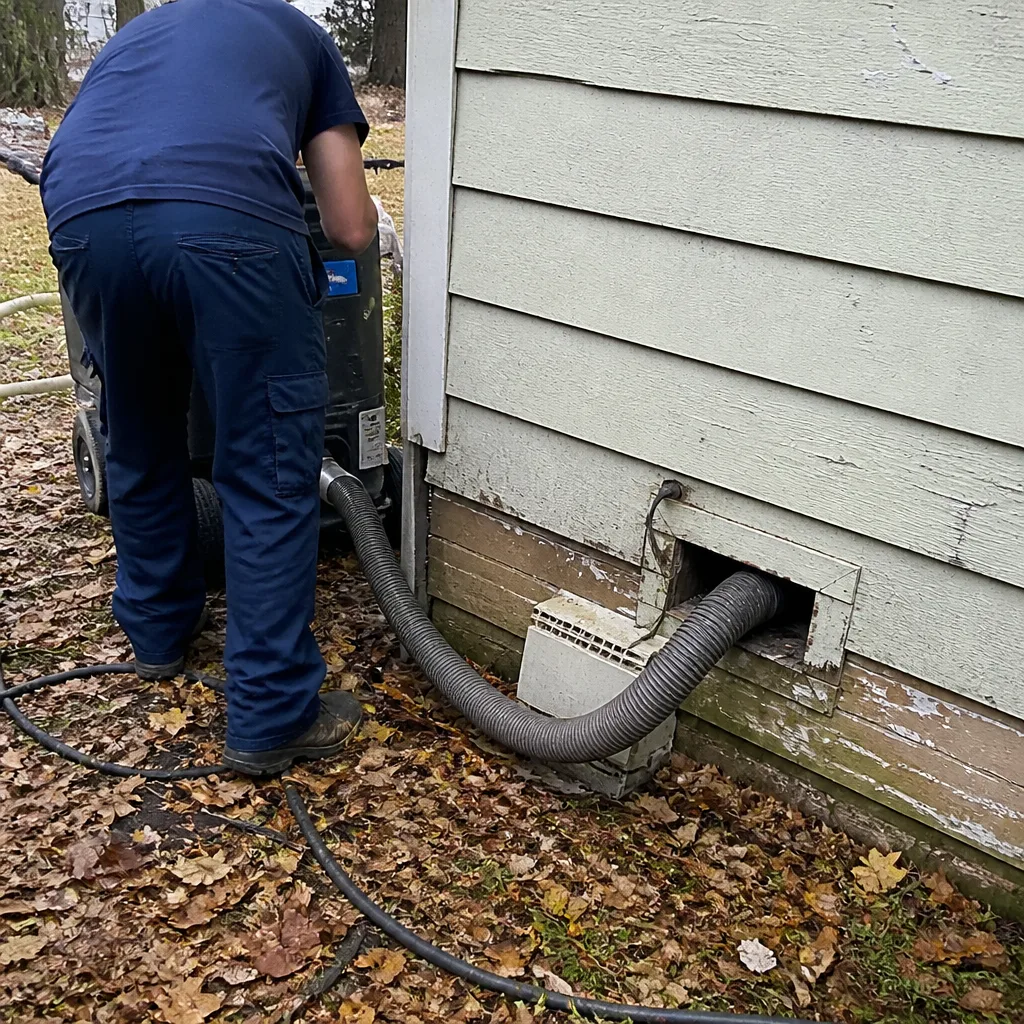 Before
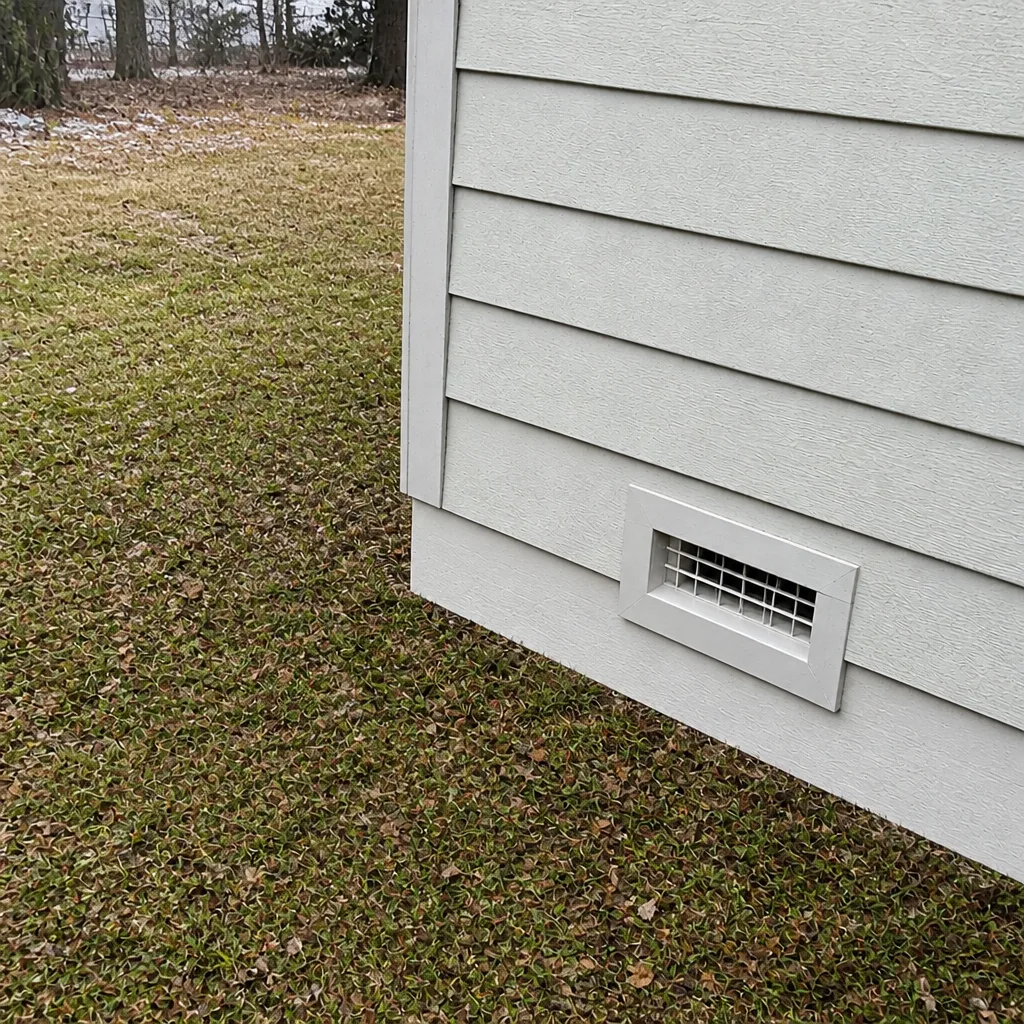 After
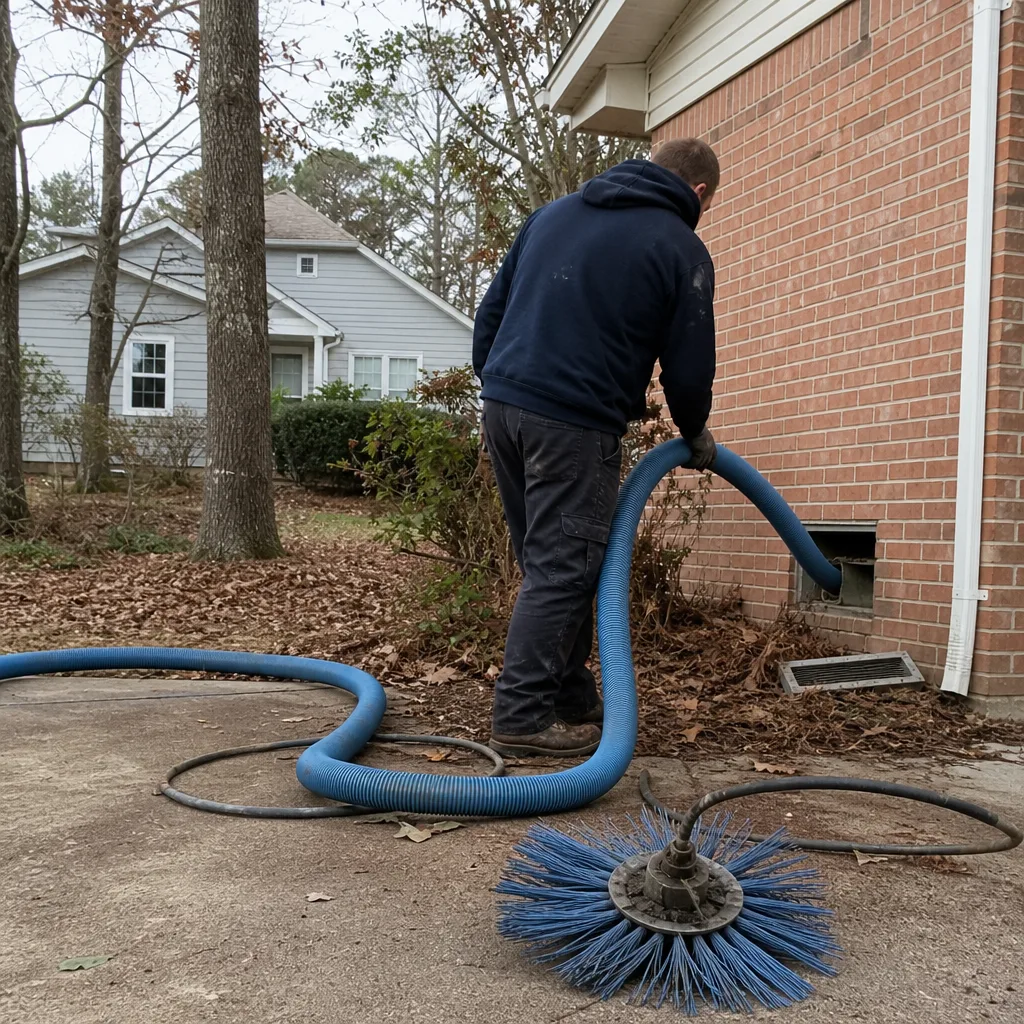 Before
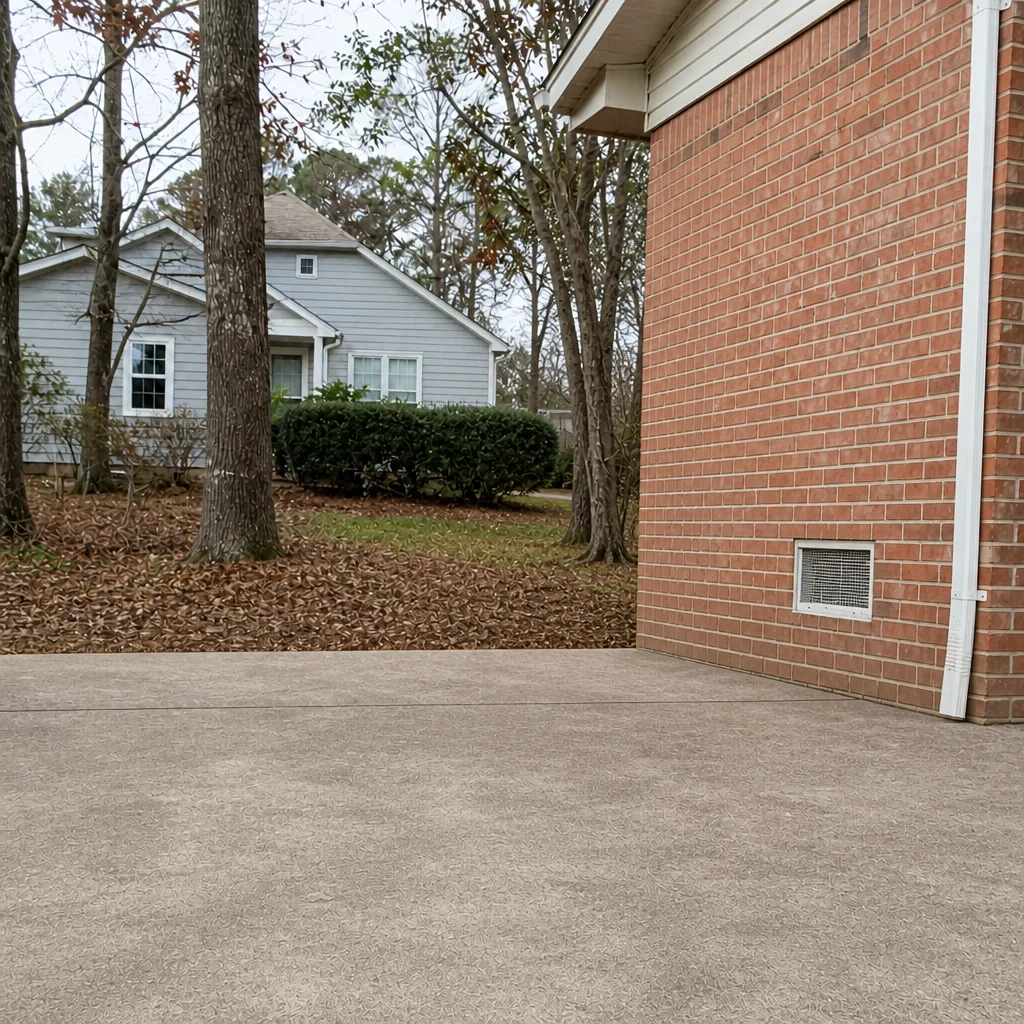 After
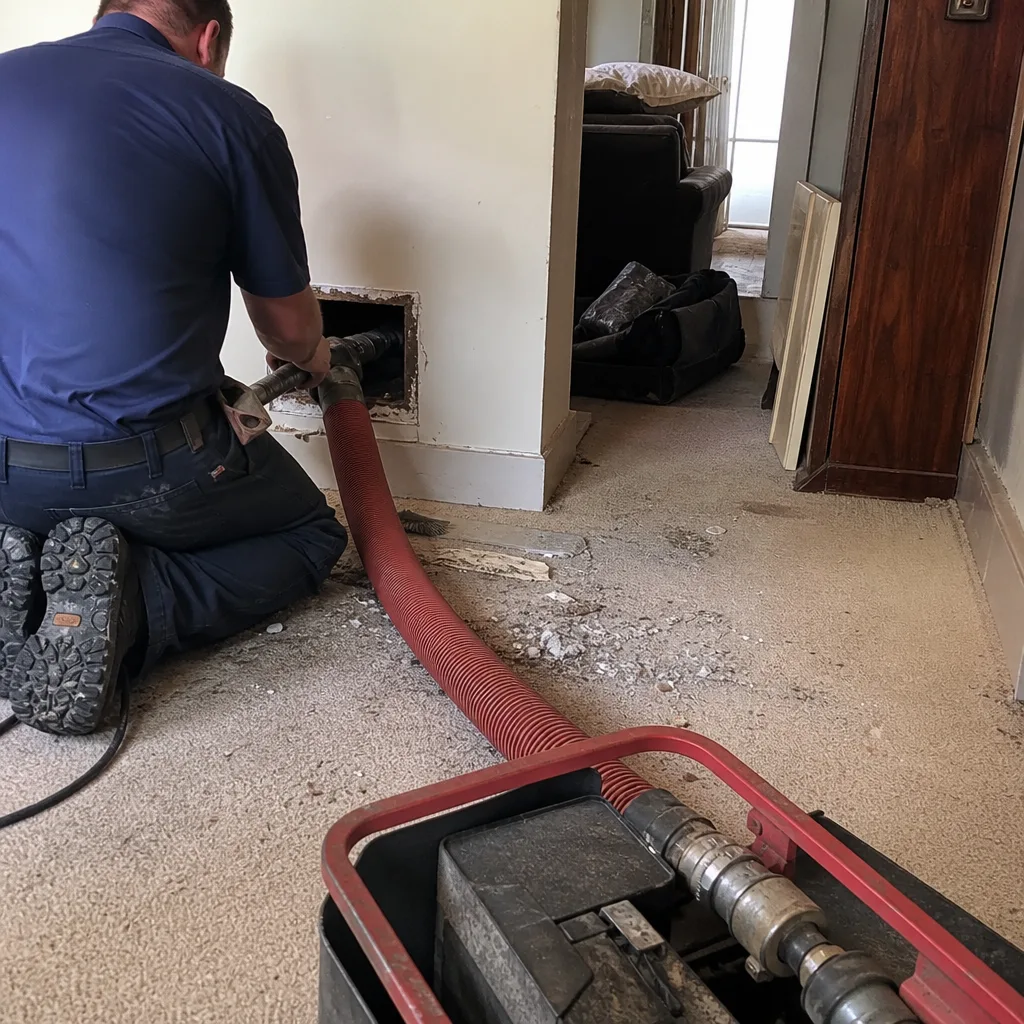 Before
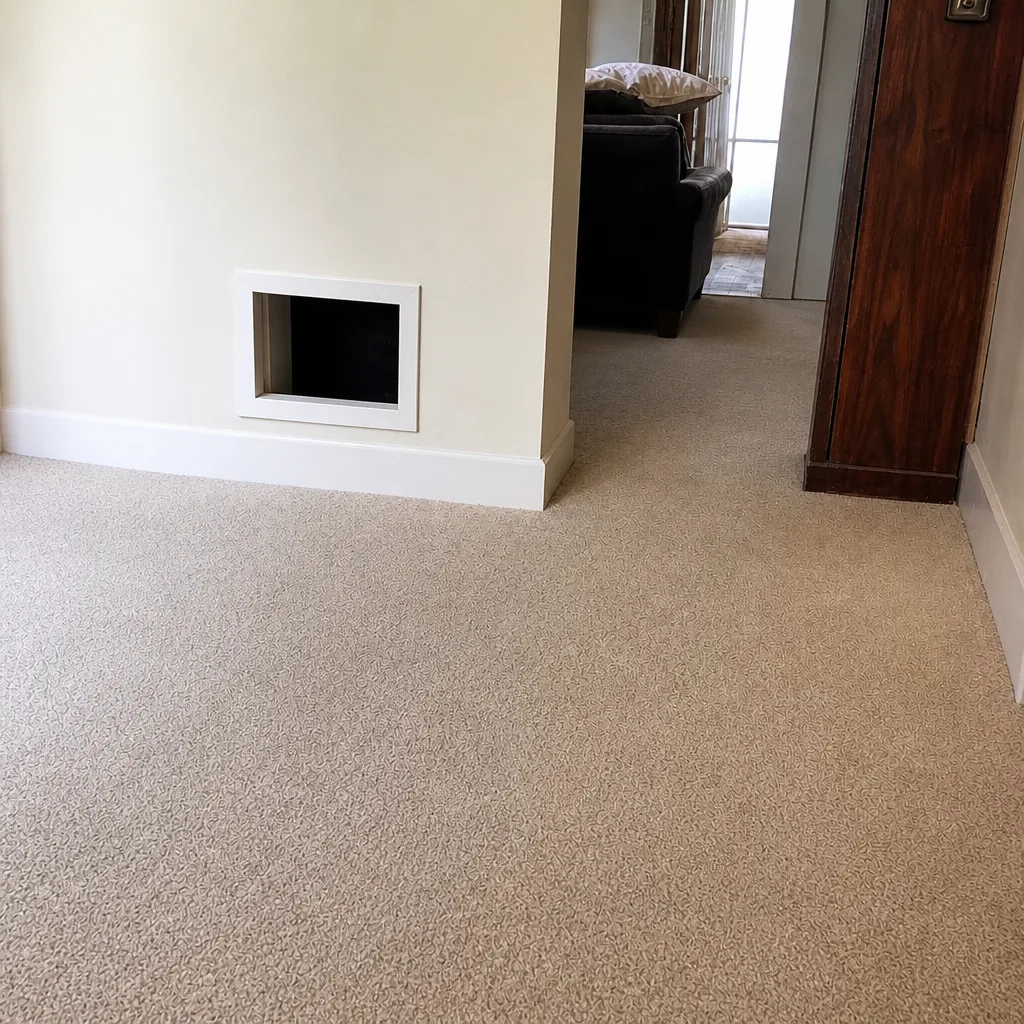 After
When to Call a Professional
Call a professional when any of these are true: belly-mounted returns in a crawlspace, visible mold or musty odor, a home with allergy or asthma sensitivities, flexible duct runs where DIY agitation risks liner damage, or a full system that hasn’t been cleaned in years. Each of these requires equipment that consumer rentals can’t match, and in the mold case, it’s a safety matter rather than a quality one. Air Duct Cleaning Lake Jeanette offers free estimates in Lake Jeanette. Call (877) 792-7174. We answer 24/7. Fast dispatch from 7am to 7pm, Sunday through Friday. Our technicians have up to 13 years of experience with contact cleaning systems and HEPA-rated containment across the full range of ductwork types.
Frequently Asked Questions
No, a shop vac can’t clean air ducts effectively because consumer suction and airflow fall well short of what bonded particulate requires. You can clean registers, change filters, and clear accessible dryer vent sections yourself. Anything past the register boot, especially belly-mounted returns, calls for professional equipment.
Pricing is per system, quoted by written estimate, with one flat price agreed before work starts. That protects you from the per-vent pricing approach and surprise add-ons some companies use. Call (877) 792-7174 for an exact quote; estimates are free.
Before-and-after photos of your own ducts. That’s the standard we hold ourselves to, and you should ask any company for the same. Photos taken at the register, the trunk, and the access point give you a clear visual record. If a contractor can’t produce them, the answer is that you don’t know.
Most homes benefit from professional cleaning every three to five years, sooner if you have pets, recent construction, visible mold, or a member of the household with allergies. In Lake Jeanette’s humid summers, moisture-driven buildup can push that interval shorter, so a visual inspection between visits is worth the ten minutes. Call (877) 792-7174 if you’d like a free read on whether your home is due.
Yes. The full scope covers duct cleaning, duct repair and sealing, dryer vent cleaning, HVAC cleaning, and air quality sanitizing. That matters because ductwork is one part of the indoor air path; the coil, plenum, and dryer vent all sit on the same chain.
Don’t clean them yourself. Mold in a duct run is a containment job; the spores spread when the surface is agitated in an open room. Professional HEPA-rated containment and extraction are the correct method, and remediation-grade equipment is what makes it safe. Call (877) 792-7174 and we’ll assess the scope.
We answer 24/7. Fast dispatch, 7am-7pm, Sunday through Friday. We’re closed Saturday.
The Bottom Line
DIY air duct cleaning isn’t a failure of effort. It’s a failure of physics. Consumer suction tops out well below what bonded particulate needs, and no attachment closes that gap. Registers, filters, and accessible dryer vent sections are fair game for a homeowner. Belly-mounted returns, flexible duct runs, mold-adjacent conditions, and HVAC components all belong with professional equipment that pairs contact agitation and simultaneous HEPA extraction. For a Lake Jeanette home, that boundary usually appears within the first few minutes of inspection. If you’re anywhere near it, the honest move is a professional look, a written scope, and photos. We’re Air Duct Cleaning Lake Jeanette, and if you’d like a free estimate, call (877) 792-7174. We answer 24/7. Fast dispatch from 7am to 7pm, Sunday through Friday.
Written by the team at Air Duct Cleaning Lake Jeanette.