
Last updated November 24, 2026
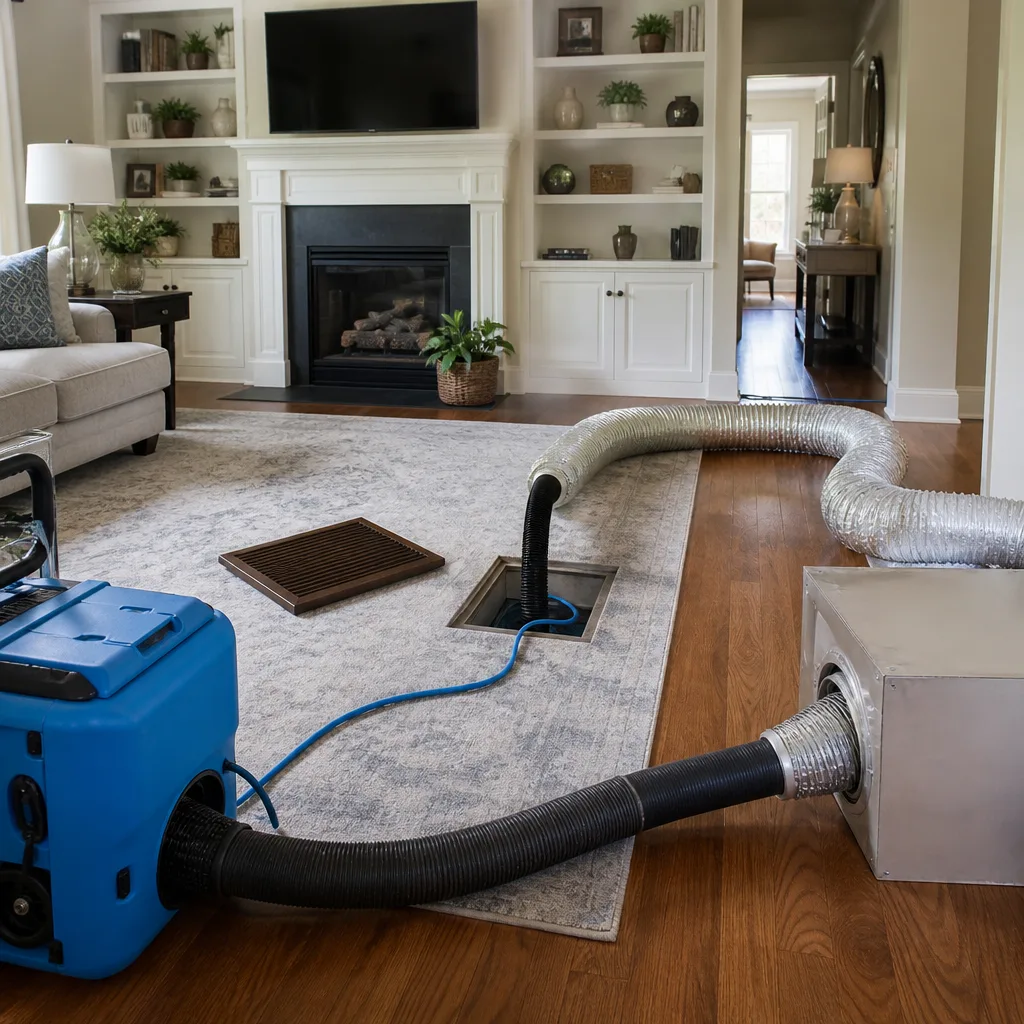 Whole-home duct cleaning
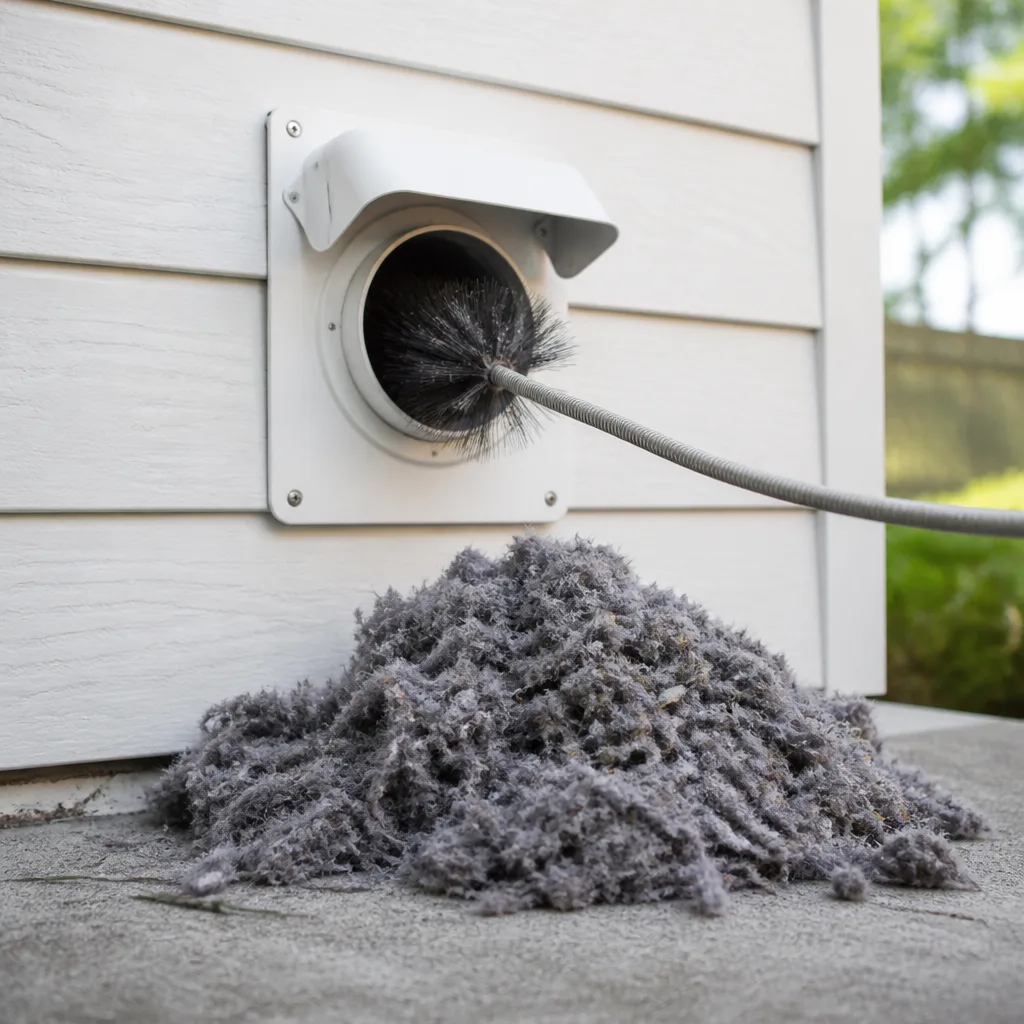 Dryer vent cleaning
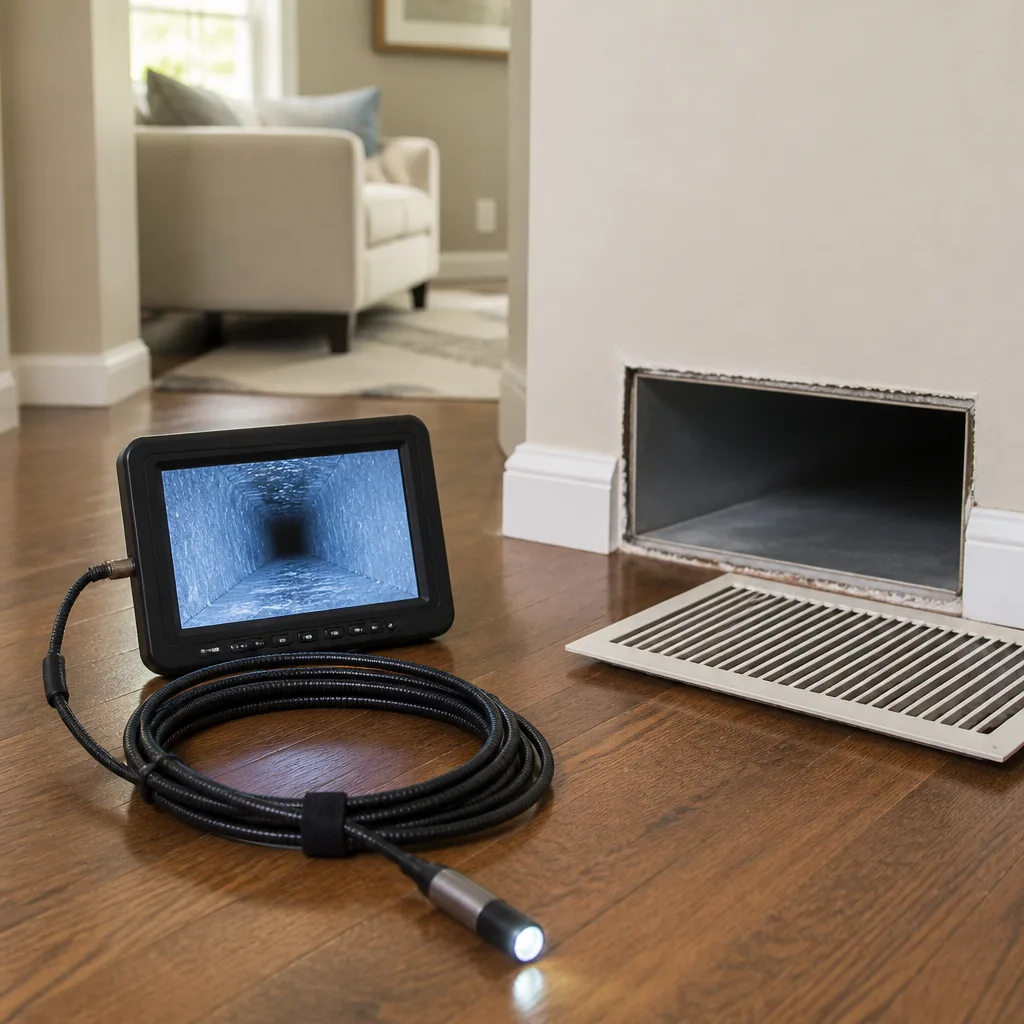 Camera inspection
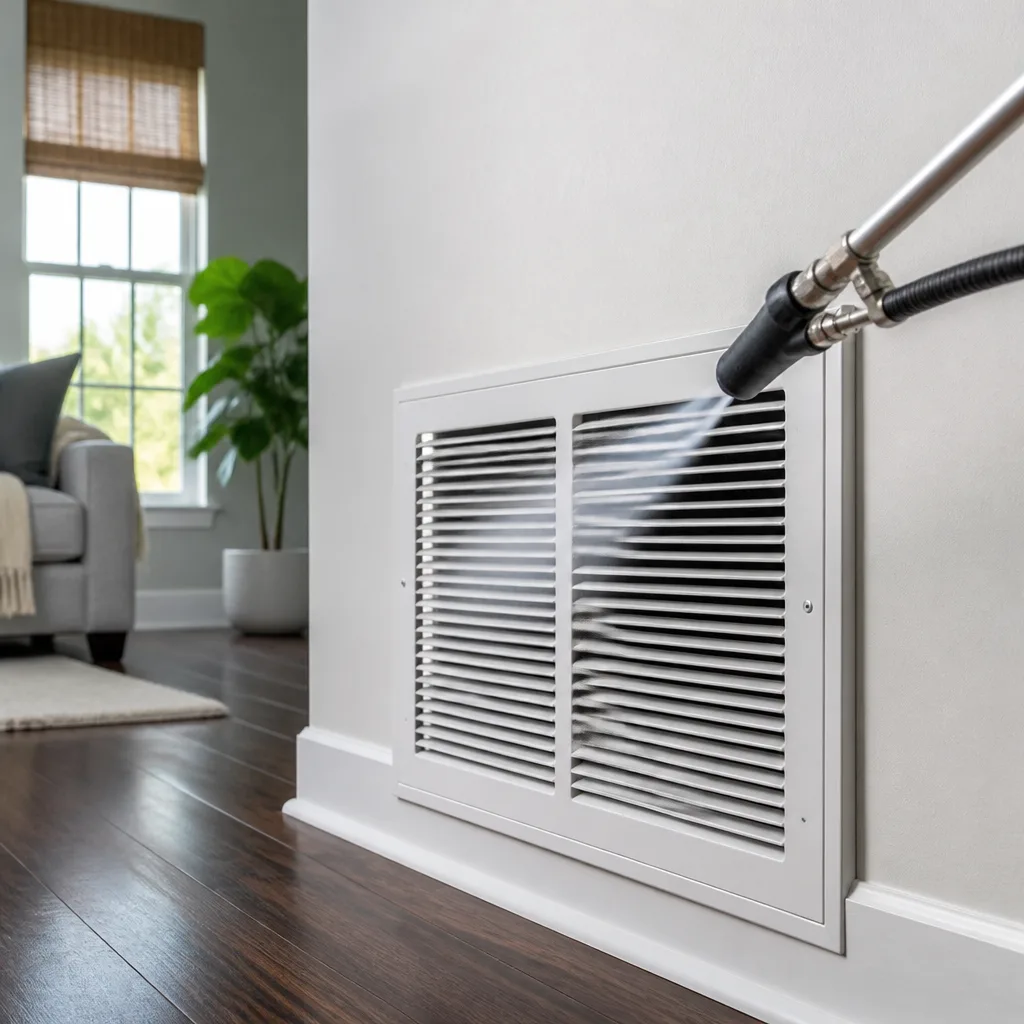 Sanitizing & deodorizing
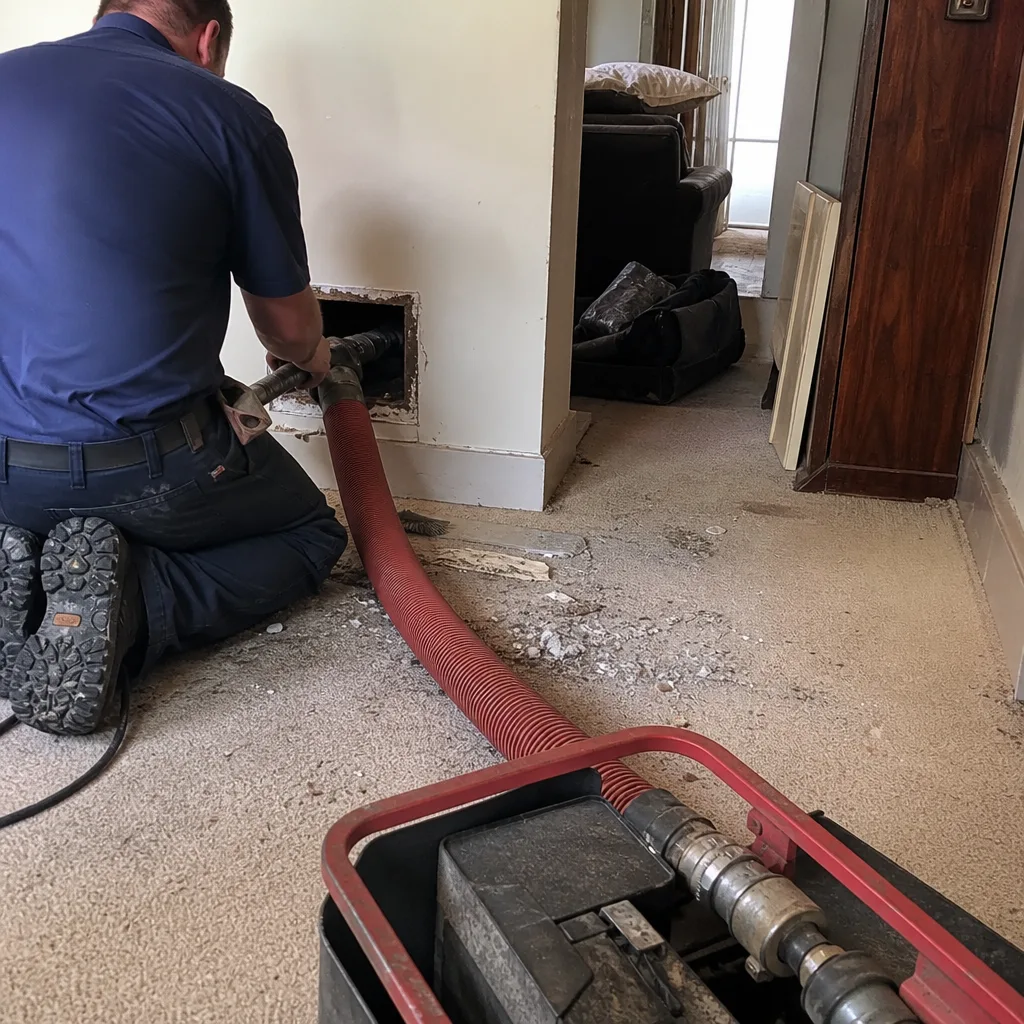
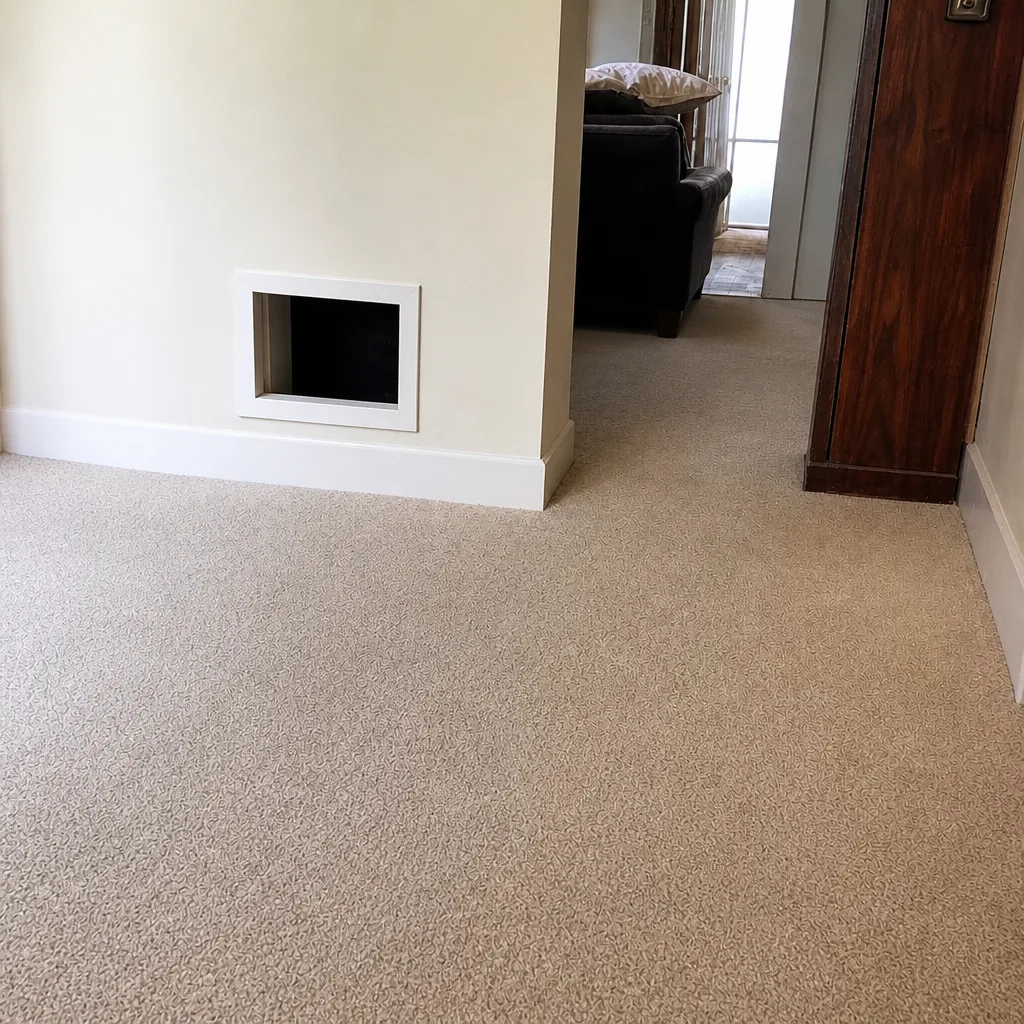
Whole-system duct and dryer vent check with before-and-after photos - you see exactly what came out of your vents
That "$99 whole-house special" is a bait ad - the real number appears once they are in your hallway, or the "clean" is a shop-vac at the register. We photograph the inside of your ducts before and after instead.
How to Hire an Air Duct Cleaning Contractor in Lake Jeanette: A Step-by-Step Guide
The warning most homeowners never hear is that badly done duct cleaning can be worse than no cleaning at all. The EPA has said outright that improper cleaning can release more contaminants into your living space than leaving the ducts alone. That warning exists because almost anything with suction can be marketed as “duct cleaning equipment,” up to and including a shop-vac and a leaf blower. The gap between a legitimate job and a harmful one comes down to equipment, containment, and written scope, and none of those are visible in a coupon price. This guide walks you through the vetting sequence we’d use on our own homes in Lake Jeanette, from the three equipment questions to ask before you book to the exact language your written scope should contain.
Quick Answer
To hire an air duct cleaning contractor in Lake Jeanette, verify three things before you book: the vacuum’s negative-pressure containment setup, the contractor’s contact agitation method (rotary brush, air whip, or skipper ball), and a written, line-item scope of work. Then confirm the technician carries liability insurance and that before-and-after photos will be taken of your specific ducts. A legitimate contractor will welcome those questions; a coupon outfit will dodge them.
Styles & brands we work with
- Whole-home duct cleaning
- Dryer vent cleaning
- Camera inspection
- Sanitizing & deodorizing
Table of Contents
- Why Lake Jeanette Ducts Get Dirty So Fast
- The Three Equipment Questions to Ask Before Booking
- What NADCA Membership Actually Tells You (And What It Doesn’t)
- What a Written Scope of Work Must Include
- License and Insurance Specifics for North Carolina
- How to Compare Two Quotes When the Terminology Doesn’t Match
- How to Verify the Work Was Actually Done
Why Lake Jeanette Ducts Get Dirty So Fast
Lake Jeanette sits around a manmade lake on the northern edge of Greensboro, and lake-adjacent air carries more moisture than the drier inland air just a few miles away. That moisture does two things to ductwork: it raises the risk of condensation on cold supply lines in summer, and it makes any settled dust more likely to clump and cling to duct walls instead of blowing through. When clumped dust sits on galvanized metal in a humid environment, it becomes a food source for mold spores that would otherwise stay dormant.
In our experience running Air Duct Cleaning Lake Jeanette jobs in this part of Guilford County, the combination we see most often is moisture plus fine construction dust. Lake Jeanette has continued to add new construction, and new construction means drywall dust. That dust has a fine, talc-like consistency, and it doesn’t just fall into the return grilles – it migrates through the entire system for months after the builder leaves.
Two more local factors worth flagging:
- Pollen season. The Piedmont’s spring pollen load is heavy, and a return duct pulls in whatever the filter doesn’t catch. Households with allergy sensitivity typically notice duct loading first in the spring and again in early fall.
- Humidity swings. Lake Jeanette summers push indoor humidity high enough that a marginally maintained system starts to develop that musty smell. Ducts don’t cause it, but they hold what it grows on.
You don’t need a crisis to justify a cleaning. But the pace at which ducts load up here does mean that “I’ll get to it someday” turns into a harder, more expensive job later. That’s true whether you call us or anyone else.
The Three Equipment Questions to Ask Before Booking
This is the single most important section of this guide. A contractor’s equipment determines whether the job removes contaminants or aerosolizes them. Ask these three questions word-for-word, and listen for whether the answer is specific or vague.
- “What’s the CFM rating of your vacuum?” CFM is cubic feet per minute, the measure of how much air the vacuum moves. Real duct cleaning vacuums are rated well into the thousands of CFM. A shop-vac, however large, runs a fraction of that. If the contractor can’t give you a number or hedges, they’re likely running consumer-grade suction.
- “How do you establish negative pressure?” The answer should describe connecting a HEPA-rated vacuum to the system at a strategic point – typically a main trunk or return – so that the entire duct run is held under negative pressure while agitation happens. Negative pressure is what keeps dislodged debris traveling toward the vacuum rather than out into the room. A contractor who answers “we just blow it out with compressed air” has just told you how the contamination ends up on your furniture.
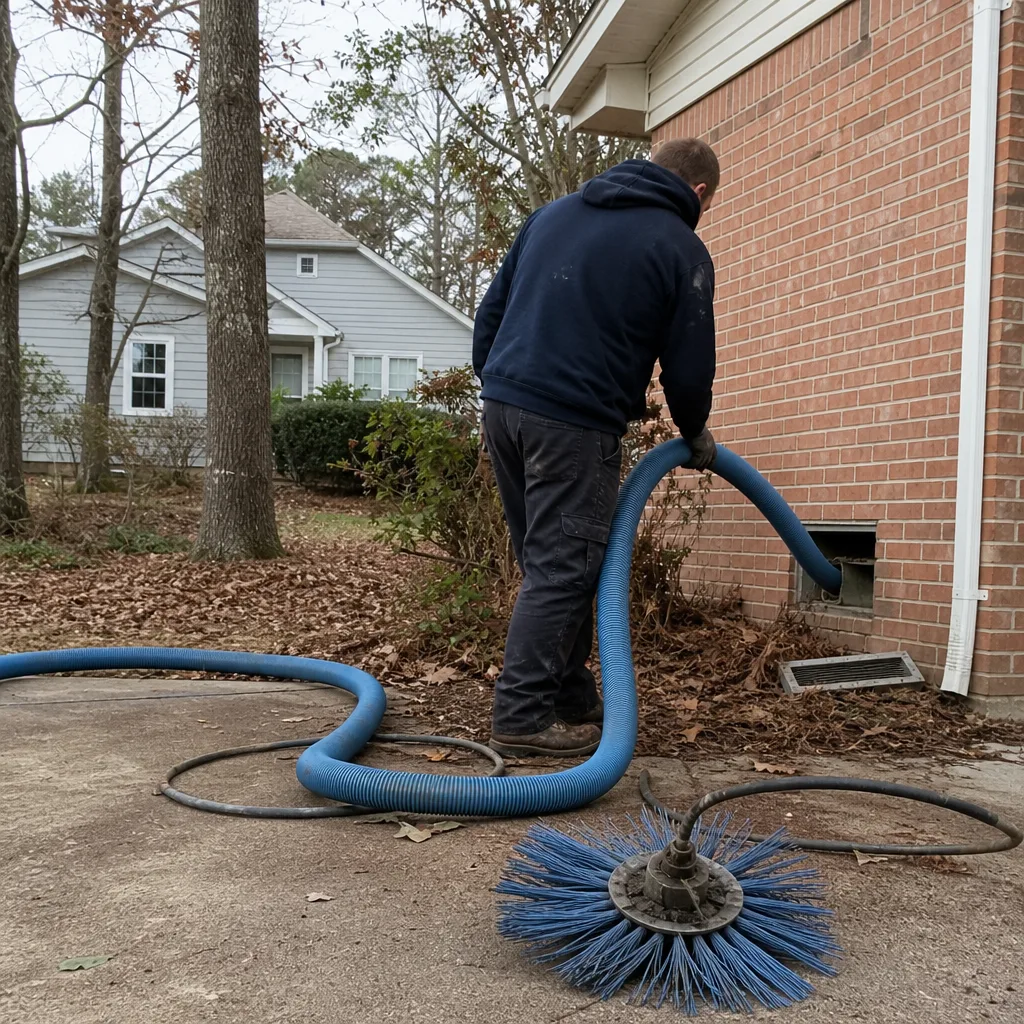
- “What agitation tool do you use?” There are three common types: a rotary brush (a spinning, stiff-bristled head that physically scrubs the duct wall), an air whip (compressed air that flails a hose around the duct interior), and a skipper ball (a compressed-air nozzle that propels itself down the run). The rotary brush is the contact-cleaning standard because it actually touches the surface. Air whips and skipper balls rely on air velocity alone, which is fine for lightly soiled ducts but weak on adhered debris and unsafe on flexible duct liner if pressure isn’t controlled.
The method matters because combining contact agitation with simultaneous HEPA extraction – brushes scrub the walls while the vacuum captures what comes off – is what a proper job looks like. We use Rotobrush contact-cleaning systems paired with Nikro HEPA-rated vacuum equipment for exactly that reason. The same equipment roster is what remediation contractors bring to mold-adjacent and post-construction jobs, and Abatement Technologies containment equipment is how those environments stay controlled.
If a contractor uses a brush without simultaneous extraction, or extraction without a brush, that’s a partial job. Not necessarily dishonest – but you should know what you’re paying for.
What NADCA Membership Actually Tells You (And What It Doesn’t)
NADCA is the National Air Duct Cleaners Association, the trade body that publishes the ACR (Assessment, Cleaning, and Restoration) standard for the duct cleaning industry. Membership is meaningful, but it’s a lower bar than most homeowners assume.
What NADCA membership does suggest:
- The company has agreed to operate under a published industry standard.
- At least one person in the company has typically completed NADCA’s certification coursework (Air Systems Cleaning Specialist, or ASCS).
- The company has access to industry guidance on containment, inspection, and source removal that a pure coupon operation ignores.
What NADCA membership does not guarantee:
- That the technician who shows up is the certified person. Certification belongs to an individual, not to the truck. The business may hold membership while a junior crew member does the work. Ask directly: “Will the ASCS-certified technician be on this job?” You’re allowed to ask.
- That the equipment coming to your house meets the standard. Membership is a company-level credential; equipment varies by crew and by job.
- That the scope will be comprehensive. NADCA membership signals intent and training, not a fixed checklist. The written scope is still the deciding document.
Treat NADCA membership as a useful filter that shrinks the pool of candidates. It doesn’t replace any of the other three questions in this guide.
What a Written Scope of Work Must Include
Verbal scope is worth nothing. Ask for it in writing before work starts, and read it carefully. Here’s what a legitimate scope of work looks like.
A proper scope must specify each of these as separate, line-item tasks:
- Which duct components are included. Supply trunks, supply branches, return trunks, return branches, and any drain pans, coils, or plenum boxes. The most common bait-and-switch is pricing “duct cleaning” that only covers one or two of these.
- The vent count actually being serviced. A per-vent price only makes sense when the vents are itemized. If you can’t count the vents on the scope and match them to your home, ask.
- Protection of floor and furnishings. Drop cloths, corner guards, and shoe covers should be listed. Not glamorous, but it’s a sign the contractor treats your home as a home.
- Pre-inspection protocol. A proper job includes a pre-inspection – a visual check of the interior of at least one duct run, a look at the air handler, and identification of any visible mold, pest activity, or damaged liner. That inspection should be documented.
- Post-cleaning verification. The scope should name the inspection method – typically a visual inspection with a camera or scope – and the condition the duct must be in for the job to be considered complete.
- What happens if damage is found. Liner failure, disconnected joints, and crushed flex runs are all things that turn up mid-job. The scope should state whether repair is included, offered at an additional cost, or not serviced at all.
- Sanitizing products (if included). If the contractor plans to apply a sanitizer, the brand and product category should be named. Guardsman-grade protective products are the kind of specificity to look for.
- Photographs. Before-and-after photos should be part of the scope, not a courtesy. More on this below.
What should “before-and-after photos” actually document? Not the outside of a vent, and not a generic stock image of a clean duct. The photos should show the inside of your system – the same section of duct, from the same angle, before agitation and after extraction. A legitimate contractor will take five to ten interior images before the work and a matching set afterward, and they’ll share them with you at the end of the job.
License and Insurance Specifics for North Carolina
North Carolina does not have a single statewide “air duct cleaning license.” That’s the first thing to understand. The work is regulated piecemeal: general contractor licensure applies to work above certain dollar thresholds, mechanical contracting applies to HVAC system modification, and business registration applies to everyone who runs a company. What that means practically:
- A business license is the floor, not the ceiling. Any LLC can hold a business license. It says nothing about whether the person at your door knows what negative pressure is or has ever looked inside a duct.
- General liability insurance is essential. Ask for a certificate of insurance – the contractor should be able to email one to you before the job. If they can’t produce one, stop the conversation.
- Workers’ compensation coverage matters if more than one person shows up. If a crew member is injured in your house and the contractor carries no workers’ comp, the liability trail can land at your feet.
- If the job touches the HVAC system, ask about mechanical licensure. Cleaning duct interiors is not the same as modifying an HVAC system, but duct repair and sealing may brush up against mechanical contract requirements. A contractor who can explain this distinction is more reliable than one who pretends there’s no such thing.
The local pro doing the work is licensed and insured as their state requires, and asking for proof is not rude. It’s just due diligence. Any contractor who is put off by the question has given you all the information you need. The air duct cleaning we coordinate includes scope documentation and photo verification for exactly this reason.
How to Compare Two Quotes When the Terminology Doesn’t Match
This is where most homeowners stall. One quote says “clean HVAC system, 12 vents, $XYZ.” The other says “air conveyance cleaning, source removal, includes supply and return, $ABC.” Are those the same job? Often not. Here’s how to align them.
Ask both contractors to answer these questions in writing and side-by-side:
- “Is source removal by rotary brush included, or is this air-only cleaning?” This is the biggest scope difference in the industry, and it’s usually the one buried in the language.
- “Are both supply and return ducts serviced?” Some quotes cover only supply. Returns are usually dirtier.
- “How many vents? What’s the per-vent or per-system ceiling?” A quote that says “up to 10 vents” is meaningfully different from “16 or fewer.”
- “Is the air handler and coil cleaned, or is this ducts-only?” These are separate line items because they are separate work.
- “Are before and after photos of the interior ducts included?” A “no” here is informative.
- “What’s the total if additional work is needed?” Both contractors should give you a range for the most likely repair add-on (a disconnected flex run, for example). A contractor who can describe the range isn’t afraid of honest pricing.
When you’ve filled in both columns, the two quotes usually stop looking like an apples-to-apples choice. They weren’t. A quote that’s half the price typically covers a fraction of the scope, or uses air-only agitation. The HVAC cleaning we run follows the same source-removal standard, so the comparison method works on that side of the system too.
How to Verify the Work Was Actually Done
Closing the loop matters because the job is done inside a system you can’t easily see. Three verification steps to take at the end of any job, from us or anyone:
- Review the before-and-after photos together. Same duct section, same angle, before and after. If the photos show only the vent cover, ask why.
- Look at the boots and registers. A thorough contact-cleaning job leaves the boots cleaner than it found them, and the grilles wiped down (not just vacuumed). If a contractor skips the boots, ask what was actually cleaned.
- Ask for the post-inspection report. Any pre-existing damage – cracked liner, disconnected run, crushed flex – should be noted in writing, with a photo, so you can address it later if needed.
We’ve seen plenty of “after” photos of air handler labels and none of duct interiors. Those aren’t verification, they’re decoration. Reputable contractors will share the photos you ask for.
Common Mistakes to Avoid
- Booking on a coupon price without checking the scope. A low headline price often covers air-only cleaning, one duct component, or a small vent count. The invoice grows through add-ons once the technician is on site.
- Skipping the CFM question. It’s the single fastest way to separate a real vacuum from a shop-vac. If they can’t name a CFM figure, they’re guessing – and so are you.
- Confusing a company-level NADCA listing with a technician-level credential. Ask which NATE or ASCS-certified person will actually be on the job.
- Accepting “duct cleaning” as a single line. Ducts are a system: supply, return, boots, plenum, air handler. A one-line quote almost always under-scopes the work.
- Ignoring the air handler and coil. Cleaning ducts while leaving a loaded coil behind is half a job. Add-on line items should be clearly listed in the scope.
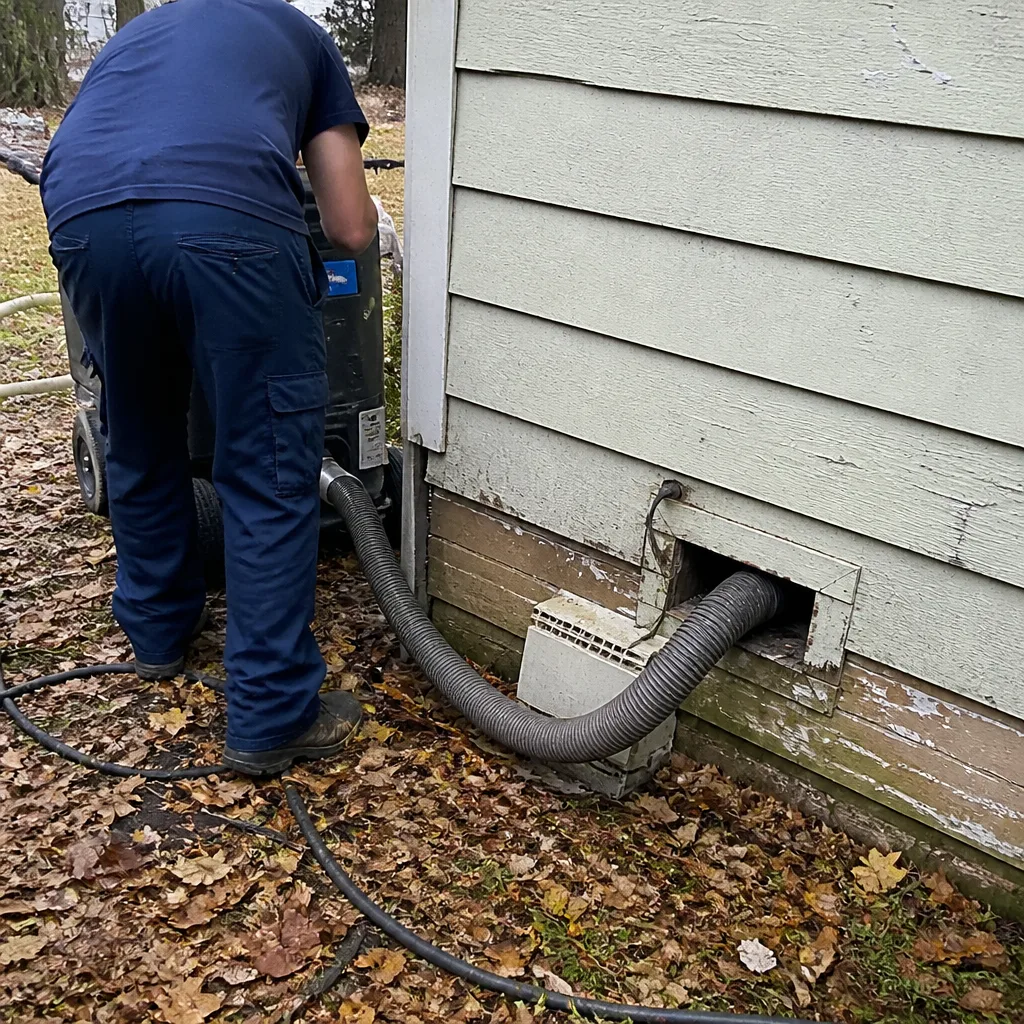
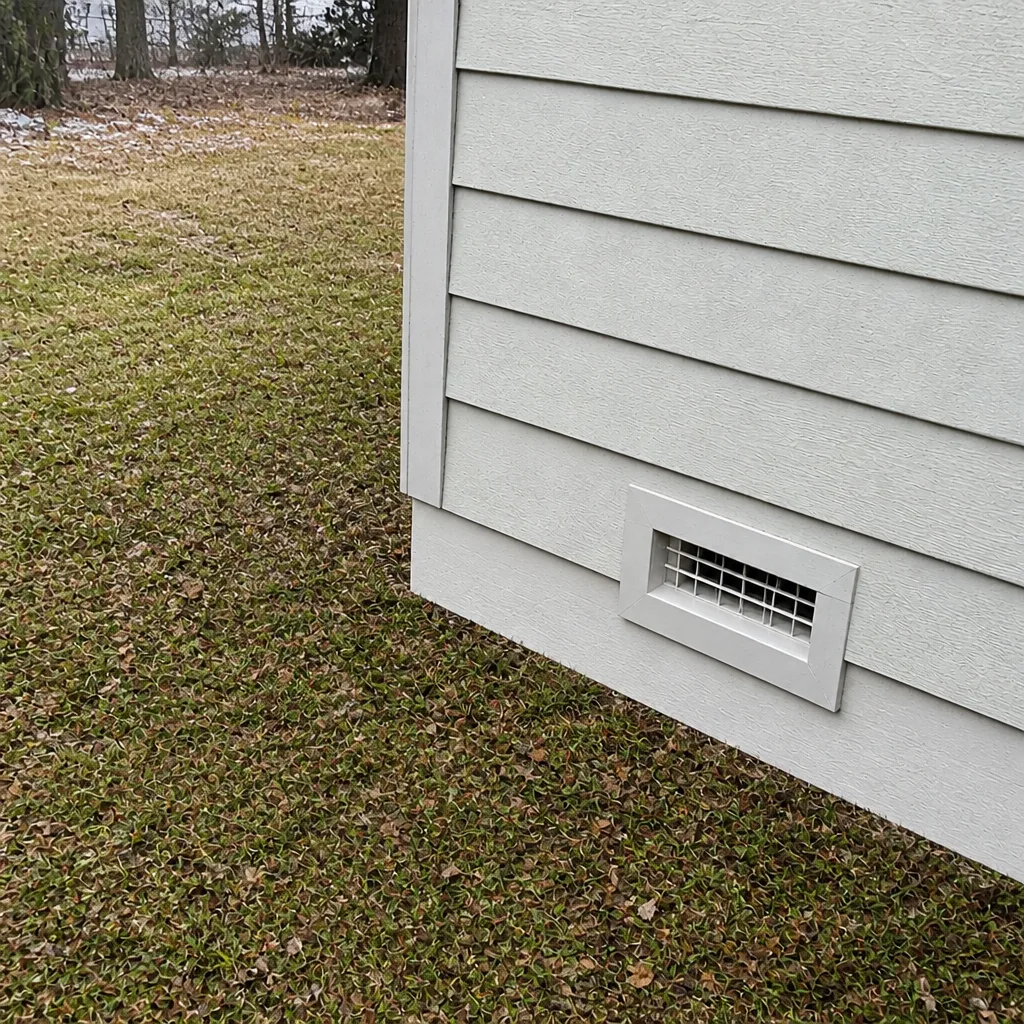
- Skipping the dryer vent. Dryer vents accumulate lint the same way ducts accumulate dust, and the fire risk from a blocked dryer vent is a genuine safety concern. Have it checked as part of any full-duct appointment, and use dedicated dryer vent cleaning work if lint buildup is already visible.
- Not asking about sanitizing products. If a contractor plans to apply a sanitizer, ask the brand and the product. “We spray something in there” is not an answer.
One mistake worth calling out separately: hiring on the strength of a “free” inspection alone. Free inspection offers are sometimes legitimate – we offer free estimates – but they are not a substitute for asking the three equipment questions and getting a written scope. The inspection is the beginning of the conversation, not the end.
See the difference
 Before
 After
 Before
 After
 Before
 After
When to Call a Professional
A proper duct cleaning is not a frequent task. Most homes in Lake Jeanette can go a few years between cleanings, with earlier service after specific triggers: major construction or renovation dust, a visible musty odor when the system runs, uneven airflow between rooms, recent pest activity, or persistent allergy symptoms that climb when the HVAC comes on. Households with asthma or allergy sensitivity, or with pets, tend to reach that threshold sooner. If you’re uncertain, a pre-inspection can answer the question quickly without committing to the cleaning.
If the dryer vent is slow or the lint screen fills much faster than it used to, that’s a separate safety call. Same week is right. If air velocity from any vent drops sharply, or you can hear something rattling or scraping inside the trunk, that’s a duct-repair question first.
Our technicians have up to 13 years of experience, and Air Duct Cleaning Lake Jeanette offers free estimates in Lake Jeanette – call (877) 792-7174. We answer 24/7. Fast dispatch from 7am to 7pm, Sunday through Friday.
Frequently Asked Questions
For a typical Lake Jeanette home, most full-system air duct cleaning runs in the estimated $400 to $800 range, with cost driven by vent count, whether the air handler is included, and whether source removal by rotary brush is part of the scope. Whole-home scopes with fewer vents can land lower, and larger homes with multiple zones can run higher. There’s no honest per-vent price to quote sight unseen – the written estimate sets the final price. Call (877) 792-7174 for an exact quote; estimates are free.
The most common reasons are air-only agitation instead of contact-brush cleaning, supply-only coverage without returns, and a lower vent count dressed up as “the whole house.” A coupon price that’s a fraction of the market rate almost always reflects a smaller scope, not a better deal. The scope questions in this guide are the fastest way to identify which of those it is. Call (877) 792-7174 for an exact quote – we’ll walk through the scope line by line first.
Ask for matching interior before-and-after photos of your own ducts, and check the boots and registers yourself at the end of the job. A legitimate contractor will show you the same section of duct from the same angle before and after, and will leave the grilles wiped down. If all you get is a picture of the air handler label, that’s not verification. Call (877) 792-7174 to schedule an estimate and ask for the photo protocol up front.
Most homes here do fine with a cleaning every few years, but the local climate compresses that timeline in certain situations: after major construction or renovation dust, after pest activity, or when the system develops a musty smell that persists. Households with asthma, allergy sensitivity, or multiple pets usually find the case for more frequent service is clear. Call (877) 792-7174 and we’ll assess your system honestly – including whether you don’t need us yet.
No. It’s a useful company-level signal that the business operates under a published industry standard, but it doesn’t guarantee the technician arriving at your door holds the certification, or that the equipment on that specific job meets the standard. Ask which certified technician will be on the job, and ask the three equipment questions anyway. Call (877) 792-7174 for a written scope and a free estimate.
Yes, when it’s done wrong. Excessive air pressure can tear flexible duct liner, dislodge joints, or push debris into the air handler where it can foul the coil and blower. That’s the reason the equipment questions matter – proper contact cleaning with controlled HEPA extraction is a low-risk process, while unsupervised air-whip agitation at wrong pressure is where damage happens. Call (877) 792-7174 for a scope that names the equipment before anyone starts.
The Bottom Line
Hiring in Lake Jeanette comes down to three filters: equipment, scope, and verification. Ask for the CFM rating and the negative-pressure method, confirm which agitation tool is used, and get a line-item written scope that names supply, return, boots, air handler, and photo deliverables. Then confirm insurance and licensure – business registration is the floor, not proof of anything. Compare quotes on scope, not on price alone, because the two prices aren’t describing the same work. Verify with matching interior photos at the end. That sequence works on any contractor, including us.
Ready for an estimate? Call Air Duct Cleaning Lake Jeanette at (877) 792-7174 for a free, no-pressure evaluation. We answer 24/7. Fast dispatch from 7am to 7pm, Sunday through Friday. We’ll walk you through the equipment we run – Rotobrush contact-cleaning systems, Nikro HEPA vacuums, and Aprilaire and Honeywell air-quality products installed in the same appointment – and give you a written scope you can compare against anyone else’s. One flat price per system, agreed before work starts, with before-and-after photos of your own ducts at the end.
Written by the team at Air Duct Cleaning Lake Jeanette.